
Yes, advanced security cameras that can detect weapons are a reality today. These intelligent systems leverage AI, machine learning, and various sensor technologies like visual analytics, thermal imaging, and even millimeter-wave scanning to identify potential threats in real-time. They go beyond traditional surveillance, providing critical early warning capabilities to enhance safety in public and private spaces. Implementing these systems requires careful consideration of accuracy, privacy, and integration to maximize their effectiveness.
Are There Security Cameras That Can Detect Weapons
In an increasingly complex world, the need for robust security solutions has never been more pressing. Traditional security cameras have long been a cornerstone of safety, providing valuable evidence after an event. But what if security could be proactive, preventing incidents before they escalate? This is where the innovation of security cameras that can detect weapons comes into play. These advanced systems are changing the landscape of public safety, offering a new layer of protection that was once the stuff of science fiction.
This comprehensive guide will walk you through the fascinating world of weapon detection technology integrated into security cameras. We’ll explore how these systems work, the different technologies they employ, and the practical steps and considerations for implementing them effectively. By the end, you’ll have a clear understanding of the capabilities, limitations, and future of security cameras that can detect weapons.
Key Takeaways
- Advanced Technology: Modern security cameras use AI, machine learning, and specialized sensors (visual, thermal, millimeter-wave) to detect weapons.
- Real-time Detection: These systems can identify weapons in real-time by analyzing shapes, heat signatures, or even hidden objects, providing early warning.
- Multiple Approaches: Weapon detection isn’t just one technology; it often involves combining visual analytics, thermal imaging, millimeter-wave scanners, and acoustic sensors for comprehensive coverage.
- Beyond Traditional CCTV: Unlike conventional cameras that only record, weapon detection cameras actively analyze footage and data for suspicious objects or activities.
- Key Considerations for Implementation: Factors like accuracy, potential for false positives, privacy concerns, integration with existing systems, cost, and legal compliance are crucial.
- Enhancing Safety: When deployed correctly, these advanced security cameras significantly enhance safety by allowing for quicker response to potential threats.
Quick Answers to Common Questions
Are these systems expensive?
Yes, advanced security cameras that can detect weapons are generally a significant investment due to the specialized hardware, AI software, and installation complexity. Costs vary widely based on scale and technology chosen.
Do they replace traditional security guards?
No, they complement them. These systems provide early warning and enhance situational awareness, allowing human security personnel to respond more efficiently and effectively. Human judgment and intervention remain critical.
Can they detect a weapon hidden under clothing?
Some advanced systems, particularly those using millimeter-wave technology at access points, can detect weapons hidden under clothing. Visual AI systems are less reliable for fully concealed weapons but can sometimes detect suspicious bulges or movements.
How accurate are these weapon detection cameras?
Accuracy varies by system and technology. While modern AI-driven systems are highly accurate, they are not 100% foolproof and can still produce false positives or, less frequently, miss a threat. Regular updates and calibration improve performance.
What about data storage and privacy?
These systems typically generate and process large amounts of data. Data storage policies, retention periods, and privacy safeguards are critical considerations. Compliance with privacy regulations (like GDPR) is essential, and transparency about data collection is important.
Understanding Weapon Detection Technology in Security Cameras
Gone are the days when a security camera was merely a lens and a recording device. Today, many security cameras are intelligent “eyes” equipped with brains, thanks to advancements in artificial intelligence (AI) and machine learning. These aren’t just your standard CCTV cameras; they are sophisticated systems designed to actively monitor and analyze environments for specific threats.
The Basics: Beyond Traditional Surveillance
Traditional surveillance cameras record video footage, which is then typically reviewed by humans, either in real-time or after an incident. This reactive approach, while useful for evidence, often doesn’t prevent an event from happening. Weapon detection cameras, however, aim to be proactive. They process video streams and other sensor data continuously, looking for indicators of weapons or suspicious behavior.
How AI and Machine Learning Play a Role
At the heart of many weapon detection systems is AI, specifically deep learning algorithms. These algorithms are trained on vast datasets of images and sensor readings that include various types of weapons (knives, firearms, etc.), carried in different ways, under diverse lighting conditions, and by people of various appearances. This training allows the AI to learn patterns and characteristics that indicate the presence of a weapon. When a camera captures something that matches these learned patterns, the system flags it as a potential threat.
Types of Threats Detected
While the primary focus is often on firearms, modern security cameras that can detect weapons are becoming increasingly capable of identifying a broader range of threats. This can include:
- Handguns and Rifles: The most common target, identified by their distinct shapes and sizes.
- Knives and Bladed Weapons: Detection algorithms can be trained to recognize the outlines of various knives.
- Other Contraband: Some systems can be configured to detect other items, though this is less common for general weapon detection.
It’s important to remember that the specific threats a system can detect depend heavily on its programming, sensor types, and the data it was trained on.
Different Technologies for Weapon Detection

Visual guide about Are There Security Cameras That Can Detect Weapons
Image source: highmarksecurity.com
Weapon detection isn’t a one-size-fits-all technology. Various methods can be employed, often in combination, to provide a more robust and accurate detection system.
Visual AI Analytics (Shape & Signature Recognition)
This is perhaps the most intuitive method. High-resolution cameras capture video footage, which is then fed into an AI system. The AI analyzes the shapes, sizes, and contours of objects in the scene. It looks for weapon signatures—the specific visual characteristics that distinguish a firearm from a cell phone or a bag. For example, a system might identify the distinctive grip, barrel, or slide of a handgun being carried openly or even partially concealed. This is one of the foundational technologies for security cameras that can detect weapons.
Thermal Imaging (Heat Signatures)
Thermal cameras detect heat rather than visible light. While not directly detecting a weapon’s shape, thermal imaging can be useful in certain scenarios. For instance, if a weapon has recently been fired, it might retain a heat signature. More commonly, thermal imaging can help distinguish between metallic objects and other materials, or identify anomalies that might suggest a concealed item under clothing, though this is more challenging for specific weapon detection.
Millimeter-Wave Scanners (Non-Visible Light)
Often seen in airport security, millimeter-wave technology uses radio waves to penetrate clothing and reveal objects hidden underneath. While not typically integrated into passive surveillance cameras in the same way as visual AI, “active” weapon detection systems using millimeter-wave technology are emerging for entry points. These systems create a 3D image of a person, allowing operators to see if they are carrying a weapon, without the need for physical pat-downs. Some standalone weapon detection units incorporate this.
Acoustic Sensors (Gunshot Detection)
While not strictly “camera” technology, acoustic sensors are often integrated into a broader security system alongside cameras. These sensors are designed to detect the unique sound signature of gunshots. When a gunshot is detected, the system can triangulate its location and immediately direct nearby cameras to focus on that area, providing visual confirmation and recording. This acts as a powerful complement to visual weapon detection.
Fusion Systems (Combining Technologies)
The most effective weapon detection solutions often employ a “fusion” approach, combining two or more of these technologies. For example, a system might use visual AI to detect a suspicious shape, then use thermal imaging to confirm metallic properties, and acoustic sensors to detect associated sounds. This multi-layered approach significantly reduces false positives and enhances detection accuracy, making these security cameras that can detect weapons truly formidable.
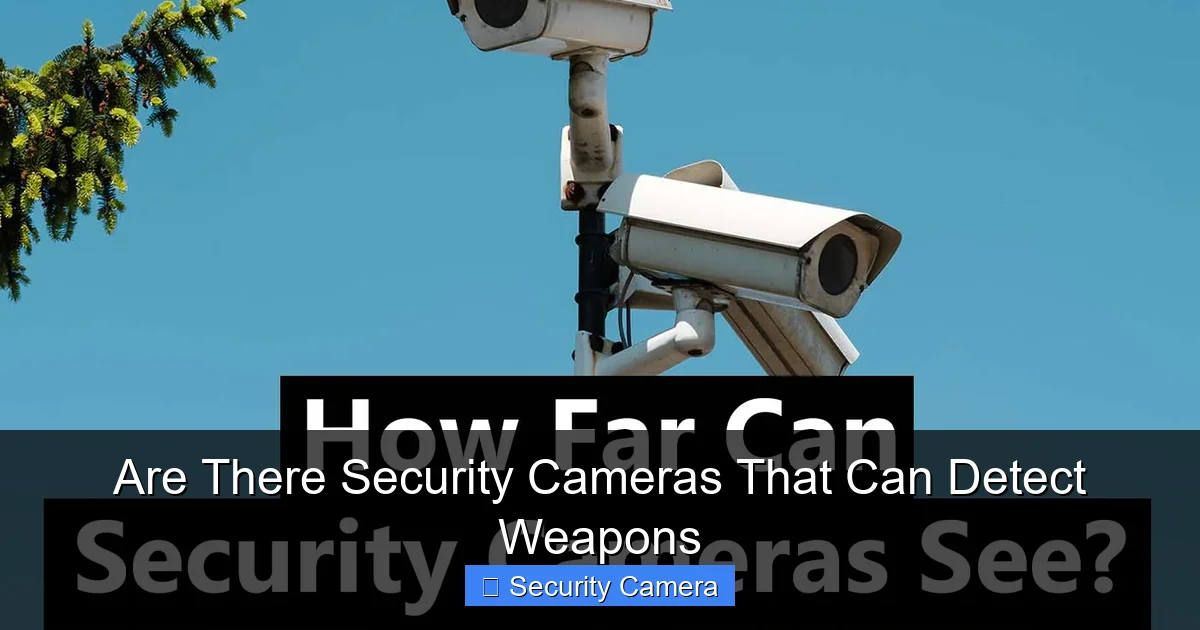
How Weapon Detection Cameras Work: A Step-by-Step Overview
Visual guide about Are There Security Cameras That Can Detect Weapons
Image source: securitycamcenter.com
Understanding the underlying technologies is one thing; seeing the workflow is another. Here’s a typical step-by-step process for how security cameras that can detect weapons operate:
Step 1: Data Collection (Sensors & Cameras)
The process begins with the security cameras and other sensors (like acoustic or thermal) continuously collecting data from their environment. This involves streaming high-resolution video, thermal data, or audio signals to a central processing unit.
Step 2: Real-time Analysis (AI Algorithms)
The collected data is immediately fed into the system’s AI algorithms. These powerful processors work in real-time, analyzing every frame of video, every sound byte, and every sensor reading. They compare this incoming data against their vast internal library of known weapon characteristics and suspicious patterns.
Step 3: Threat Identification & Classification
If the AI identifies an object or pattern that matches its criteria for a weapon, it classifies it. The system might assign a confidence score (e.g., “90% probability of handgun”) and categorize the type of weapon detected. It also often tracks the individual carrying the weapon.
Step 4: Alert Generation & Communication
Upon identification of a potential threat, the system generates an immediate alert. This alert can take various forms:
- Visual Notification: Flashing warnings on a security monitor, highlighting the weapon or individual.
- Audible Alarm: A distinct sound to alert security personnel.
- Digital Notification: Text messages, emails, or push notifications sent to predefined security teams, law enforcement, or facility managers.
- System Integration: Automatically triggering other security measures, such as locking doors or activating public address announcements.
Step 5: Verification & Response Protocol
Once an alert is generated, human intervention is crucial. Security personnel verify the threat using the live camera feed and then initiate pre-established response protocols. This might involve dispatching security guards, notifying law enforcement, or implementing a lockdown procedure. The speed of this verification and response is a key benefit of security cameras that can detect weapons.
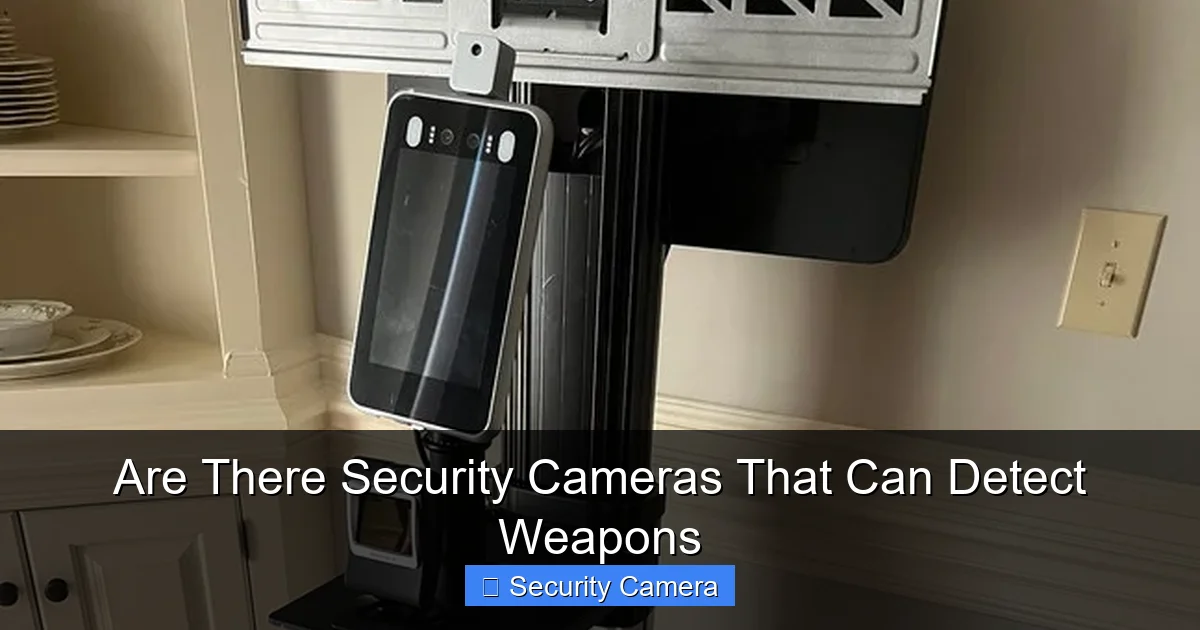
Key Considerations Before Implementing Weapon Detection Systems
Visual guide about Are There Security Cameras That Can Detect Weapons
Image source: fox17.com
While incredibly powerful, deploying security cameras that can detect weapons isn’t as simple as plugging them in. Several critical factors must be carefully considered.
Accuracy vs. False Positives
No system is 100% perfect. A major challenge is minimizing false positives (alerting to a non-threat, like a cell phone mistaken for a gun) while maximizing true positives (detecting actual weapons). High false positive rates can lead to alert fatigue and wasted resources. System calibration and regular updates are key here.
Privacy Concerns and Ethical Implications
Weapon detection systems, especially those using millimeter-wave technology or advanced facial recognition, raise significant privacy concerns. Transparent communication with the public, adherence to privacy regulations (like GDPR or CCPA), and careful consideration of where and how these cameras are deployed are paramount. The ethical use of surveillance technology is a continuous debate.
Integration with Existing Security Infrastructure
For optimal effectiveness, new weapon detection systems should integrate seamlessly with your existing security infrastructure—CCTV, access control, alarm systems, and communication platforms. A fragmented system can lead to delays and inefficiencies.
Cost and Maintenance
These advanced security cameras and their accompanying AI software are a significant investment. Beyond the initial purchase and installation, ongoing costs include software licenses, system updates, maintenance, and potentially dedicated personnel for monitoring.
Legal and Regulatory Compliance
Different jurisdictions have varying laws regarding surveillance, data retention, and the use of specific technologies. Before deployment, ensure your system complies with all local, state, and federal regulations.
Practical Tips for Maximizing Effectiveness
To truly leverage the power of security cameras that can detect weapons, consider these practical tips:
Proper Placement and Coverage
Strategic placement is vital. Cameras should cover critical entry points, high-traffic areas, and potential blind spots. Ensure sufficient lighting and clear sightlines for visual AI. For acoustic sensors, consider potential sound interference.
Regular Calibration and Updates
AI algorithms constantly improve. Ensure your system receives regular software updates and calibration to maintain high accuracy and adapt to new threats. This helps keep false positives low.
Training Personnel
Your security team must be thoroughly trained on how to monitor the system, interpret alerts, verify threats, and execute response protocols. Human operators are still essential for effective threat mitigation.
Establishing Clear Protocols
Develop clear, concise, and actionable protocols for every type of alert. What happens when a weapon is detected? Who is notified? What are the immediate next steps? Practice these protocols regularly.
Troubleshooting Common Issues
Even with advanced technology, issues can arise. Knowing how to troubleshoot common problems can save time and maintain operational readiness for your security cameras that can detect weapons.
Frequent False Alarms
If your system is generating too many false alarms, review:
- Calibration: Are the sensitivity settings too high?
- Environmental Factors: Are certain objects (umbrellas, power tools) being mistaken for weapons? Adjust exclusion zones or train the AI with more specific examples.
- Software Updates: Is the AI algorithm up to date? Newer versions often have improved accuracy.
System Integration Problems
If the weapon detection system isn’t communicating effectively with other security components:
- Network Connectivity: Check all network cables, Wi-Fi connections, and IP configurations.
- API Compatibility: Ensure that the weapon detection system’s API (Application Programming Interface) is compatible with your other systems and that all integration points are correctly configured.
- Vendor Support: Contact the vendors of both systems for assistance in resolving compatibility issues.
Connectivity and Network Issues
For IP-based camera systems, network problems can lead to dropped feeds or delayed alerts:
- Bandwidth: Ensure your network has sufficient bandwidth to handle the high volume of data from multiple cameras, especially high-resolution streams.
- Network Stability: Check for network congestion, faulty switches, or router issues.
- Power Supply: Ensure all cameras and processing units have a stable power supply.
Conclusion
The advent of security cameras that can detect weapons represents a monumental leap forward in proactive safety and security. By leveraging AI, machine learning, and a fusion of sensor technologies, these systems offer the potential to identify threats faster than ever before, enabling quicker response times and potentially saving lives. While challenges related to accuracy, privacy, cost, and integration remain, ongoing advancements are continually refining these technologies.
As we move forward, the intelligent integration of these systems into a layered security approach will be crucial. When implemented thoughtfully, with careful consideration for ethical implications and robust operational protocols, security cameras that can detect weapons stand as a powerful tool in our collective effort to create safer environments for everyone. The future of security is not just about observing; it’s about understanding, predicting, and acting.

With experience in IT support and consumer technology, I focus on step-by-step tutorials and troubleshooting tips. I enjoy making complex tech problems easy to solve.