


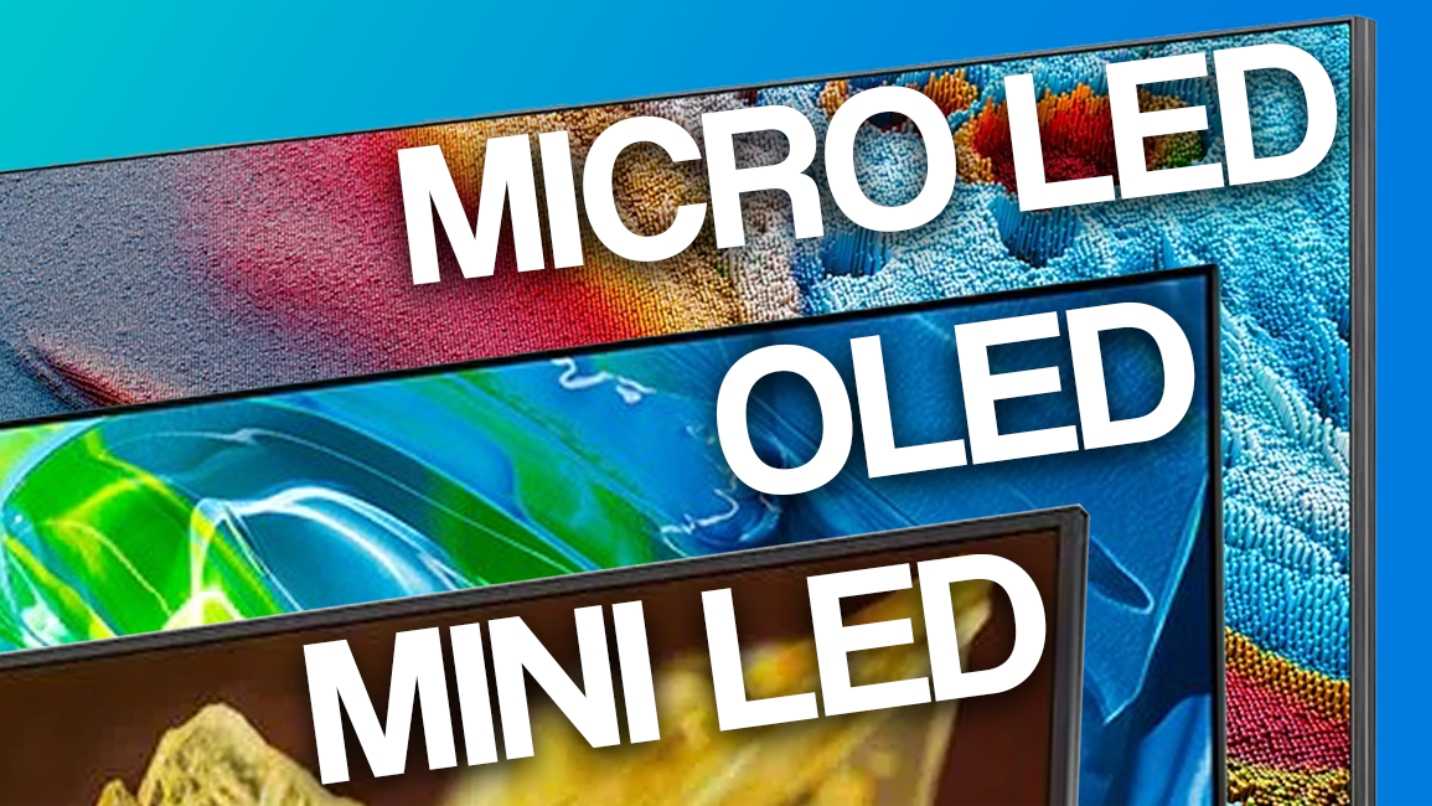
Mini LED and Micro LED monitors may sound similar, but they are quite different technologies. While both involve tiny LEDs to enhance display quality, they serve distinct purposes and are built using different methods. Mini LED monitors are an evolution of traditional LED screens, offering better brightness and contrast, whereas Micro LED displays are a cutting-edge innovation with individual self-emissive pixels, promising perfect blacks and brighter visuals.
In short, mini LED monitors are not the same as Micro LED monitors. Mini LEDs are smaller backlight units used to improve existing LCD panels, while Micro LEDs are independent, self-emitting pixels that can lead to entirely new levels of display performance. Understanding these differences helps in choosing the right monitor for your needs.
If you’re curious about how these display technologies differ and which might be better for you, read on! The world of screens is evolving rapidly, and knowing the nuances can help you make smarter choices for gaming, professional work, or entertainment.

Are Mini LED Monitors the Same as Micro LED? A Detailed Breakdown
Understanding the Basics of LED Technology
LED stands for Light Emitting Diode, a small device that emits light when an electric current flows through it. Both Mini LED and Micro LED are types of LED technology that enhance display quality. They are used in screens to produce brighter images, better contrast, and more vivid colors.
What Are Mini LED Monitors?
Mini LED monitors feature tiny LEDs measuring between 0.1 to 0.2 millimeters in size. These LEDs are used as backlighting for LCD screens, improving brightness and contrast. Mini LED technology allows for more precise control of light, creating better picture quality compared to traditional LED displays.
How Mini LED Monitors Work
Mini LEDs are placed behind an LCD panel and act as a backlight. They can turn on or off independently, which helps in producing deep blacks and bright highlights. This local dimming capability reduces light bleed and enhances overall picture clarity.
Advantages of Mini LED Monitors
- Higher contrast ratios due to localized dimming
- Brighter images suitable for HDR content
- More precise control of light and shadow
- Thinner screens compared to traditional LEDs
What Is Micro LED Technology?
Micro LED technology uses even smaller LEDs, generally less than 100 micrometers in size. These tiny LEDs are self-emissive, meaning they produce their own light without the need for an LCD panel. Each micro LED acts as a basic pixel, creating images directly on the screen.
How Micro LED Displays Work
Since each micro LED emits its own light, there is no need for a backlight or liquid crystal layer. This allows for better contrast, deeper blacks, and more accurate color reproduction. Micro LED screens are modular, meaning they can be assembled into larger displays seamlessly.
Advantages of Micro LED Displays
- Self-emissive technology leads to perfect blacks
- Higher brightness levels without sacrificing contrast
- Excellent color accuracy and vibrancy
- Better energy efficiency because LEDs only light up when needed
- Potential for very thin, flexible, and scalable screens
Key Differences Between Mini LED and Micro LED
Size of the Light-Emitting Elements
Mini LEDs are larger than micro LEDs and serve primarily as backlights. Micro LEDs are tiny enough to function as individual pixels, creating images without the need for a traditional LCD panel.
Display Structure and Design
Mini LED monitors are still based on LCD technology, with LEDs acting as a backlight. Micro LED displays are self-emissive and do not require an LCD layer, leading to more pristine image quality.
Manufacturing Complexity
Producing micro LED displays is more complex and costly because of the need for precise placement of millions of tiny LEDs. Mini LED manufacturing involves placing larger LEDs behind LCD panels, which is somewhat simpler and more scalable.
Cost and Availability
Currently, Mini LED monitors are more common and affordable for consumers, found in high-end TVs and monitors. Micro LED displays are still mostly in development or limited to premium, custom-built screens, making them less accessible and more expensive.
Practical Applications and Usage Scenarios
Mini LED Monitors in Daily Life
Mini LED technology is ideal for:
- Gaming monitors with high brightness and contrast
- Professional editing stations requiring precise color and detail
- High-end home entertainment systems with HDR content
Micro LED in Future Technology
Micro LED aims for:
- Ultra-large display walls in commercial settings
- Next-generation televisions with near-perfect blacks and brightness
- Flexible and foldable screens for innovative devices
- Wearable displays with ultra-thin profiles
Performance Comparison
| Feature | Mini LED Monitors | Micro LED Displays |
|---|---|---|
| Size of Light Source | 0.1 to 0.2 millimeters | Less than 100 micrometers |
| Self-Emissive | No, backlit LCD | Yes, self-emitting pixels |
| Contrast Ratio | High, due to local dimming | Excellent, true blacks |
| Brightness | Very high, suitable for HDR | Extremely high, with better energy efficiency |
| Color Accuracy | Improved over traditional LED | Superior, with vibrant and accurate colors |
| Manufacturing Cost | Relatively affordable and scalable | Expensive, still in development |
| Availability | Widely available in premium products | Limited, mostly concept or niche markets |
While Mini LED and Micro LED both improve display quality, they are not the same. Mini LED monitors rely on tiny LEDs as backlights for LCD screens, offering significant enhancements in contrast and brightness. Micro LED, on the other hand, uses self-emissive, microscopic LEDs as individual pixels, providing unparalleled blacks, brightness, and color accuracy. Micro LED technology holds promise for revolutionary displays but remains more costly and complex to produce. Understanding these differences helps consumers make informed choices based on their needs and budgets for screen technology.
Mini LED Monitors Are Vanishing – Here's Why (2025)
Frequently Asked Questions
What are the main differences between Mini LED and Micro LED technology?
Mini LED and Micro LED display technologies differ primarily in their size and manufacturing approach. Mini LEDs are smaller versions of traditional LEDs, typically measuring less than 0.2 millimeters, used as backlighting for LCD panels. Micro LEDs are much smaller, approximately 0.01 millimeters, and are capable of forming self-emitting pixels, similar to OLEDs. This allows Micro LED displays to offer higher contrast, better color accuracy, and improved response times without relying on a separate backlight.
How does image quality compare between Mini LED and Micro LED screens?
Micro LED screens generally deliver superior image quality due to their self-emitting pixels, which provide better contrast, richer blacks, and more vibrant colors. Mini LED displays enhance image quality by increasing backlight zones, reducing blooming and improving HDR performance, but they still depend on LCD technology. Consequently, Micro LED offers a more immersive viewing experience with deeper blacks and wider color ranges, although Mini LED can be more affordable and still significantly improve LCD performance.
Are Micro LED displays more durable than Mini LED monitors?
Micro LED displays tend to be more durable because they are composed of inorganic materials that resist burn-in and degradation over time. Mini LED monitors, built upon LCD technology, are less susceptible to burn-in but can still suffer from backlight dimming issues. The inorganic nature of Micro LEDs also contributes to longer lifespan and better resistance to environmental factors, making them suitable for long-term use in demanding conditions.
Which technology offers better power efficiency, Mini LED or Micro LED?
Micro LED technology generally provides better power efficiency because each pixel emits its own light and can turn off completely for deep blacks, reducing overall power consumption. Mini LED displays, being backlit LCDs, consume more power because they require a backlight source and additional processing to control brightness and contrast. This makes Micro LED a more energy-efficient choice, especially for high-resolution, large-format displays.
Can Mini LED and Micro LED displays be used interchangeably for different applications?
While both technologies serve high-end display needs, they are suited to different applications. Mini LED monitors excel in situations where improved LCD performance is sufficient, such as in gaming or professional workstations requiring high brightness and local dimming. Micro LED displays are better suited for premium settings, like large public screens or high-end home entertainment systems, due to their superior image quality and durability. Therefore, choosing between them depends on the specific visual performance and cost considerations of each application.
Final Thoughts
Mini LED monitors and Micro LED displays differ mainly in size and technology. Mini LED monitors use smaller LEDs to improve backlighting, offering better contrast and brightness. Micro LED displays incorporate even smaller LEDs, creating self-emitting pixels for superior image quality.
While both technologies enhance visual performance, they are not the same. Micro LED tends to be more advanced, providing better resolution and color accuracy.
Are mini LED monitors the same as micro led? No, they are distinct technologies with different capabilities, though both aim to improve display quality.



