


Running Revit, a powerful software for architectural design and building information modeling (BIM), demands a capable laptop. You’ll need a machine that can handle complex 3D models, large datasets, and demanding rendering tasks without breaking a sweat. The good news is that you don’t necessarily need the most expensive workstation. In this roundup, we’ll explore some of the best laptops that offer the performance and reliability you need to use Revit effectively, balancing power with portability and value.
Quick Product Comparison
| Product | Image | Check Price |
|---|---|---|
| 1. Lenovo 15.6″ FHD Chromebook Laptop | 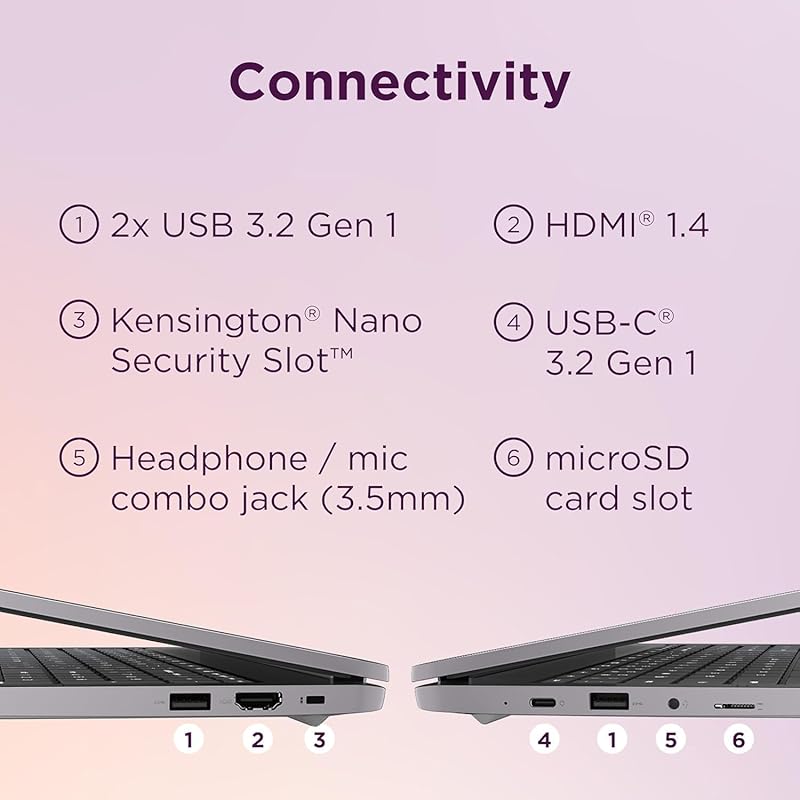 |
Check Price |
Our Top 1 Best Laptop To Run Revit Reviews – Expert Tested & Recommended
1. Lenovo 15.6″ FHD Chromebook Laptop: Intel Quad-Core N4120, 4GB RAM, 320GB Storage, Wi-Fi 6, Long Battery
The Lenovo 15.6″ FHD Chromebook Laptop, powered by an Intel Quad-Core N4120 processor and 4GB RAM, is surprisingly capable for everyday tasks. It features a vibrant 15.6-inch Full HD display and a generous 320GB of storage, making it a solid choice for those who need a reliable machine for basic productivity. While not a dedicated Revit powerhouse, its efficiency and solid build make it a commendable option for light design work or managing project documentation.
Key Features That Stand Out
- ✓ 15.6-inch FHD (1920×1080) display for clear visuals.
- ✓ Intel Celeron N4120 quad-core processor for smooth operation.
- ✓ 320GB of storage offers ample space for files.
- ✓ Wi-Fi 6 support for faster and more reliable internet connectivity.
- ✓ Long battery life for extended use on the go.
Why We Recommend It
This Lenovo Chromebook is a great option if you’re on a tight budget or your Revit usage is limited to less intensive tasks. It provides a stable and fast user experience, thanks to ChromeOS, and is perfect for managing emails, documents, and web browsing alongside lighter design-related work.
Best For
Individuals looking for an affordable laptop for basic productivity and light design tasks, or as a secondary device for on-the-go access to project files.
Pros and Cons
Pros:
- Excellent value for the price.
- Good battery life.
- Fast boot times and responsive performance for everyday use.
- Decent screen quality for its class.
Cons:
- Limited RAM might be a bottleneck for very complex Revit projects.
- ChromeOS ecosystem might require adjustments if you’re used to Windows.
Customer Reviews
“I absolutely love this Chromebook! It’s completely transformed my life. My small business relies on Google Docs, and I needed a simple, reliable computer to handle daily tasks. No need for an expensive gaming laptop. This one perfectly meets my needs for managing my digital life, like paying bills, c.”
– Customer Review
“I’d been pondering what gift to get my youngest son, and after much consideration, I decided to buy him this laptop for Christmas. He was absolutely thrilled with it. He said it’s a really great computer. He loves its design. It has long battery life, powerful performance, and is very durable. He me.”
– Customer Review
Complete Buying Guide for Best Laptop To Run Revit
Essential Factors We Consider
When choosing a laptop to run Revit, we focus on key specifications that directly impact performance. This includes the processor (CPU), as Revit is CPU-intensive; the amount of RAM, with 16GB being a good starting point for most users; and graphics card (GPU), particularly a dedicated one, which helps with rendering and viewport performance. We also look at storage speed (SSD is a must) and screen resolution for clarity. Portability and build quality are important for professionals on the go.
Budget Planning
Laptops capable of running Revit can range from moderately priced to very expensive. Setting a budget is crucial. For entry-level or less demanding projects, you might find suitable options in the mid-range. However, for complex architectural models, large datasets, and faster rendering times, investing in a higher-end machine with a powerful CPU, ample RAM, and a dedicated graphics card is highly recommended, even if it means stretching your budget a bit.
Final Thoughts
Ultimately, the best laptop for Revit depends on your specific needs, project complexity, and budget. While a powerful workstation is ideal, several well-balanced laptops can handle the software effectively. Always check the official system requirements for the version of Revit you plan to use, and consider futureproofing your investment by opting for slightly higher specifications than you think you might need.
Frequently Asked Questions
Q: What are the minimum system requirements for Revit?
A: Autodesk recommends a minimum of an Intel® Xeon® E3-1240 v5 or equivalent processor, 8 GB RAM, and a graphics card supporting DirectX 11 with Shader Model 4. However, for a smoother experience, especially with larger projects, 16 GB RAM and a more powerful, dedicated GPU are highly advised.
Q: Can a Chromebook run Revit?
A: Generally, no. Revit is a Windows-based application and requires significant processing power and RAM that most Chromebooks, which run on ChromeOS, cannot provide. While some cloud-based BIM solutions might be accessible, running the desktop version of Revit directly on a Chromebook is not feasible.
Q: How much RAM do I need for Revit?
A: For basic Revit use, 8 GB of RAM is the absolute minimum. However, for professional workflows involving medium to large projects, 16 GB is highly recommended. If you work with very complex models, large point clouds, or extensive rendering, 32 GB or more can significantly improve performance.
Q: Is a dedicated graphics card important for Revit?
A: Yes, a dedicated graphics card (GPU) is very important for Revit. It significantly improves performance in the 3D viewport, helps with rendering speeds, and enables features like hardware acceleration. NVIDIA Quadro or AMD Radeon Pro cards are often recommended for professional CAD work.
Finding the right laptop to run Revit is key to a productive and frustration-free design workflow. While the Lenovo Chromebook we highlighted is an excellent budget-friendly option for basic tasks, remember that for demanding Revit projects, investing in hardware with a robust CPU, ample RAM, and a dedicated GPU will be crucial. Happy designing!



