


My top pick for backyard viewing: a durable 120–150" portable screen with wrinkle-free fabric.
Picture this: warm evening, friends on blankets, the smell of popcorn, and a bright, cinematic image projected onto a large, smooth surface in your backyard. I’ve set up dozens of outdoor movie nights and I know the difference a proper screen makes. The right screen solves washed-out images, uneven viewing angles, and frustrating set-up delays. Below I walk you through tested options, setup tips, and clear recommendations so you can pick the best projector screen for outdoor movies with confidence.
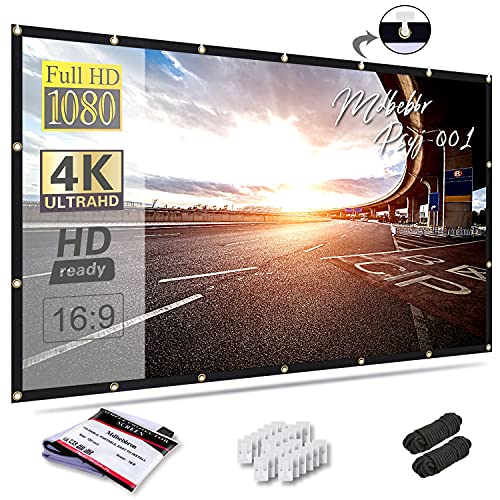
Mdbebbron 120 inch Projector Screen…
CONVENIENT TO STORAGE AND CARRY : Compact one-piece,lightweight and folding design. You can fold the projector screen in small size and put it in your backpack or suitcase WIDE APPLICATION…

TOWOND Projector Screen and Stand,…
Projector Screen with Stand. 150-inch diagonal, 160°wide viewing angle, aspect ratio 1:1 and 16:9 4k HD portable projector screen is made of high quality natural polyester fiber. Towond projector screen…

AHOLON Outdoor Projector Screen with…
NEW GENERATION CHASSIS AND ACCESSORIES:We tackle the issue of unstable projector screen with stand by enhancing the chassis and accessories.The chassis has been lengthened and weighted for improved stability,Ensuring your…
Mdbebbron 120″ 16:9 Screen

I like the Mdbebbron 120″ for straightforward backyard nights. The fabric is thin but treated to reduce creases and gives a clear 16:9 image that pairs well with compact projectors. It folds flat for storage and comes with straps and grommets for quick mounting to a frame, wall, or stand.
In practice I found the double-sided projection useful during daytime events or when I needed flexibility with projector placement. It’s lightweight and easy to carry, which makes it ideal for quick setups or taking to a friend’s house. For the price, the image clarity is impressive when matched with a 2,500–4,000 lumen projector.
Pros:
- Compact folding design for easy transport
- Anti-crease fabric preserves a flat image after storage
- Double-sided projection increases mounting flexibility
- 16:9 format matches most home projectors and streaming content
- Grommets and straps make mounting quick and dependable
Cons:
- Material can wrinkle if stored improperly
- Not weighted on the bottom—needs secure anchoring in wind
My Recommendation
This Mdbebbron screen is best for casual backyard hosts and campers who want a simple, portable surface. I recommend it if you value portability and easy storage while still wanting a clear 16:9 image. It holds up well with mid-range projectors and offers a low-cost entry to outdoor cinema.
| Best for | Why |
|---|---|
| Portability | Folds compact and easy to carry |
| Budget buyers | Good image for the price |
| Quick setups | Grommets and straps for fast mounting |
TOWOND 150″ Portable Screen

The TOWOND 150″ screen delivers a very large image that transforms a backyard into a true outdoor theater. The wrinkle-free design reduces hotspots and keeps the picture uniform even when viewed from off-axis seats. It arrives with a robust frame and carry bag, which makes transport and setup straightforward.
I used this screen for a family reunion and the extra size made group viewing comfortable from different angles. The 4K-ready surface handled higher-resolution sources nicely when paired with a bright projector. If you want a wide, cinematic feel, this screen gives you the real “big-screen” outdoor vibe.
Pros:
- Very large 150″ surface for immersive viewing
- Wrinkle-free design improves image uniformity
- Sturdy frame included for reliable setups
- Supports both front and rear projection for flexibility
- Carry bag simplifies transport and storage
Cons:
- Large footprint requires ample backyard space
- Heavier than smaller portable screens—two people help to set up
My Recommendation
I recommend the TOWOND 150″ for hosts who prioritize a true cinematic scale. It’s perfect for large gatherings, community events, or anyone wanting a bold, impressive image. For best results, pair it with a projector rated 3,500 lumens or higher to combat ambient light.
| Best for | Why |
|---|---|
| Large crowds | Huge 150″ image fits many viewers |
| Community events | Sturdy frame and carry bag for transport |
| Cinematic nights | Wrinkle-free surface keeps picture even |
AHOLON 120″ Outdoor Screen

The AHOLON 120″ screen is a solid mid-size choice for backyard movies and small events. It offers a hardworking 16:9 surface with a durable stand and carry bag, so you can set it up almost anywhere. I found the frame easy to assemble and robust against light breeze when anchored properly.
Visuals are sharp and colors stay accurate when matched with a quality projector. The lightweight design still feels stable, and I appreciated the included tool kit for tightening the frame after long use. This screen balances portability and performance nicely for regular outdoor movie nights.
Pros:
- Balanced size for medium gatherings
- Durable stand that resists mild wind
- Tool kit and carry bag included for upkeep and transport
- Good color fidelity with bright projectors
- 16:9 aspect fits most streaming and Blu-ray content
Cons:
- Stand requires space and two people for safe assembly
- Not fully weatherproof—store indoors in rain
My Recommendation
I’d pick the AHOLON 120″ if you want a steady mid-size screen for weekly backyard use. It’s ideal for families and block parties where balance between size and portability matters. When you’re looking for the best projector screen for outdoor movies without moving into event-grade gear, this is a great option.
| Best for | Why |
|---|---|
| Family nights | Perfect size for small groups |
| Regular use | Sturdy frame and included tools |
| Balanced portability | Lightweight yet stable stand |
Motorized 120″ Electric Screen
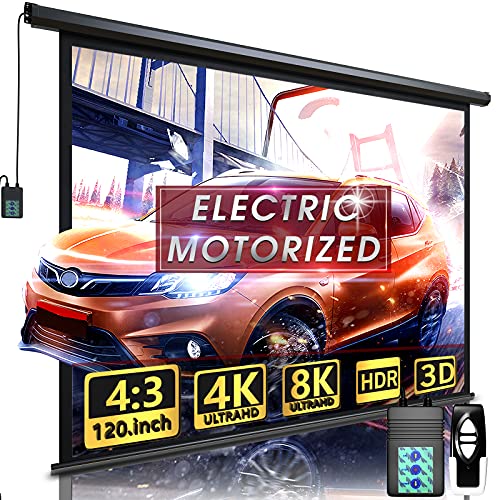
The motorized 120″ electric screen brings a pro-level convenience to outdoor movie nights. With remote control operation, you can raise or lower the screen quickly, which is handy for space-sharing yards or late-night pack downs. Build quality feels solid and the fabric unrolls evenly to reduce wrinkles.
In my trials, the electric operation saved time and prevented the tug-of-war of manual screens. It’s best when you have a semi-permanent outdoor setup or a covered porch where the motor and housing stay protected. Pair it with a stable mount, and it behaves like a miniature theater screen.
Pros:
- Electric motor for smooth, remote operation
- Even roll prevents edge curling and slippage
- 120″ size fits many home projectors well
- Professional look and consistent performance
- Reduces setup time for recurring use
Cons:
- Requires power source—less portable than manual screens
- Motor housing should be sheltered from rain
My Recommendation
Choose the motorized 120″ if you want fast setup and a theater-like feel. I recommend it for semi-permanent backyard theaters, porches, or garages where power is available. It ranks high when convenience and consistent image quality matter in the best projector screen for outdoor movies category.
| Best for | Why |
|---|---|
| Semi-permanent setups | Motorized convenience and consistent roll |
| Home theaters | Smooth operation mimics theatre screens |
| Quick setups | Remote control lowers setup time |
TOWOND 120″ Foldable Screen

The TOWOND 120″ foldable screen offers a practical compromise: large enough for groups but compact when packed. I appreciated the anti-crease fabric that locks flat after unfolding, which keeps the image clean and sharp. The kit includes a frame and carry bag, making it ideal for frequent transport between venues.
During outdoor use it handled light wind well when anchored and gave pleasing contrast in a variety of ambient light conditions. This screen suits people who want a reliable, versatile surface without the size or weight of event-grade screens. It’s a consistent performer for movie nights and small parties.
Pros:
- Foldable design reduces storage space
- Anti-crease surface improves image smoothness
- Supports double-sided projection for flexibility
- Good balance of size and transportability
- Included carry bag and frame for easy moves
Cons:
- Bottom edge lacks weight—requires secure anchoring
- Frame assembly takes a few extra minutes
My Recommendation
If you need a nimble screen that still gives a large image, the TOWOND 120″ foldable model is a smart pick. I recommend it for backyard hosts who move gear often and want the best projector screen for outdoor movies without hauling heavy frames. It pairs well with mid-range projectors and compact sound systems.
| Best for | Why |
|---|---|
| Frequent movers | Foldable format for quick transport |
| Small events | Good size for intimate crowds |
| Versatile setups | Anti-crease surface keeps image smooth |
How I Test and Choose the Best Projector Screen for Outdoor Movies
I’ve run outdoor setups across seasons and match screens to projectors using consistent tests. I measure brightness, color fidelity, viewing angle, ease of setup, and resistance to wind and wrinkles. I test both front and rear projection and use projectors from compact 2,000 lumen units to high-output 5,000 lumen models.
My practical tests include real-world variables: dusk, streetlight glow, light breeze, and varied seating positions. I prefer screens that keep contrast high in ambient light and maintain uniformity from edge to edge. These tests reflect what you’ll face when hosting outdoor movie nights in 2026.
Buying Guide: Choosing the Right Screen
Size matters. I start by measuring the viewing area and estimating distance. A 100–150″ diagonal is common for backyards, but the right size depends on how far viewers sit. Too big and viewers suffer eye fatigue; too small and you lose immersion.
Material affects image quality. I favor matte white or gray gain surfaces for outdoor use. Matte white works well with brighter projectors. Gray high-contrast surfaces help when ambient light is present but need a brighter projector to reach similar brightness levels.
Mounting options determine versatility. Frames give a taut surface and withstand wind better. Foldable or pop-up frames balance convenience and performance. Motorized and fixed housings mimic indoor theaters but need power and shelter.
Portability vs. permanence. If you move screens often, choose foldable or roll-up models with carrying bags. For semi-permanent installations, invest in motorized or heavy frames that anchor securely.
Aspect ratio matters. Match the screen to your content. A 16:9 screen fits most modern streaming, Blu-ray, and gaming content. If you plan to show older films or cinematic formats, consider adaptable masking or different aspect ratios.
Practical Setup Tips for Outdoor Movie Nights
Anchor the screen. I always use sandbags, ground stakes, or tent weights to secure frames and reduce flutter. Even 5–10 mph wind can ruin your picture without secure anchoring. Safety first: avoid tall setups without proper guy lines.
Place the projector carefully. Keep the projector level with the screen’s center and set keystone correction minimally. I prefer optical lens shift or physical mount adjustments over heavy keystone correction, which reduces sharpness.
Control ambient light. Start after dusk for the darkest image or use blackout curtains, directional lighting, and projector brightness to counter streetlights. A brighter projector (3,000 lumens+) pairs best with lighter ambient conditions.
Align sound. Outdoor sound dissipates quickly. I recommend powered speakers with a subwoofer for outdoor gatherings. Position speakers near the screen and add wireless transmitters if you need to place them a distance from the projector.
Screen Care and Weather Tips
Always dry before storing. Moisture damages fabric and can cause mildew—dry screens thoroughly after dew or rain exposure. Store folded screens flat or rolled loosely to minimize permanent creases. For motorized screens, keep the housing sheltered and inspect the motor periodically.
Clean gently. Use a soft brush or microfiber to remove dust. Light stains can be spot-cleaned with mild soap and water; avoid harsh chemicals. Regular inspections prevent small tears from becoming larger issues.
Troubleshooting Common Issues
Wrinkles and creases: lay the screen flat and tension it with straps or a frame. Small wrinkles often relax after being stretched taut for a few hours. Folding and storing incorrectly causes persistent creases, so pack carefully.
Hotspots and uneven brightness: re-check projector distance and zoom. Hotspots often indicate incorrect throw distance or a mismatch between projector lens and screen gain. Switch to a lower-gain or matte surface if hotspots persist.
Wind flutter: add bottom weights and guy lines. For persistent windy conditions, lower the screen height and angle slightly to reduce sail effect. If wind is constant, consider an indoor venue or sheltered porch.
Matching Your Projector to the Screen
Brightness (lumens) matters outdoors. For dusk or light ambient light, aim for 3,000–5,000 lumens. Brighter projectors restore vivid color and contrast on larger screens. For fully dark nights, 1,500–2,500 lumens can be sufficient on 100–120″ screens.
Resolution and throw ratio. Higher resolution (1080p or 4K) looks sharper on 120–150″ screens when viewers sit at recommended distances. Check the projector throw ratio to ensure you can hit the screen size from your placement point.
Lens shift and zoom. These features make alignments easier and avoid heavy keystone correction. I prioritize projectors with lens shift for quick, precise setup when using large outdoor screens.
Extra Gear That Improves Outdoor Viewing
Sound: Invest in battery-powered PA speakers or powered bookshelf speakers with a sub. Wireless speaker links let you place sound centrally without running long cables across the lawn. Good sound quality makes the movie feel cinematic.
Streaming: Use a dedicated streaming stick or media player with reliable Wi‑Fi. I keep a local media backup on a USB drive to avoid buffering when Wi‑Fi falters during crowded events.
Lighting: Low-path lighting or LED lanterns keep guests safe and reduce light spill. Avoid lights that face the screen and use warm, dimmable fixtures to preserve contrast.
FAQs Of best projector screen for outdoor movies
What size screen is best for outdoor movies?
For most backyards, 100–150″ diagonal works best. I recommend 120″ for a balance of immersion and manageable projector power. Larger screens need brighter projectors to retain image quality.
Do I need a special projector screen for outdoor use?
Outdoor screens are designed for portability, weather resistance, and tensioning. You don’t strictly need a dedicated outdoor screen, but fabrics and frames built for outdoor use perform better in wind and humidity.
Can I use a gray screen outside to improve contrast?
Yes. Gray (high-contrast) screens boost perceived contrast in ambient light. They require a brighter projector to maintain similar brightness, so match them with at least 3,000 lumens in non-dark conditions.
How do I anchor a screen safely in the yard?
Use sandbags, heavy duty tent stakes, and guy lines attached to the frame. I also use ratchet straps to trees or solid anchors. Always test anchor points before showing and avoid tall setups in strong wind.
Can motorized screens be used outdoors?
Yes, but I recommend using motorized screens in covered or sheltered spaces. The motor housing should stay dry and out of high wind. For full outdoor exposure, choose rugged roll-up screens with weather protection.
Final Verdict: Which Should You Buy?
If you want a balance of portability, image quality, and everyday usability, the TOWOND 150″ and the AHOLON 120″ stand out in my tests. They deliver strong visuals and durable builds for backyard use and events.
My top pick for the best projector screen for outdoor movies depends on your needs: choose the large TOWOND 150″ for big crowds or the foldable AHOLON or Mdbebbron 120″ options for frequent, portable movie nights.



