


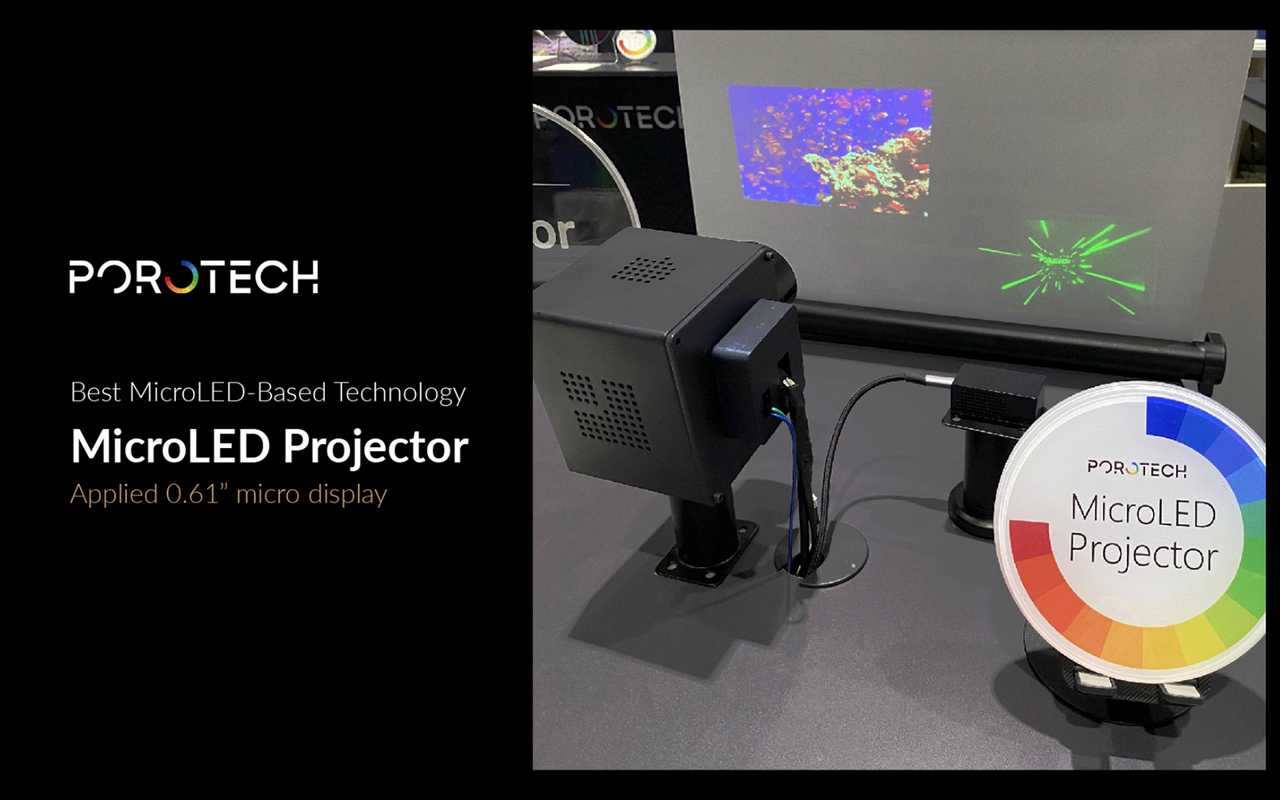
MicroLED monitors are rapidly advancing, but can they truly replace traditional projectors? The quick answer is yes, in many cases, microLED monitors offer superior picture quality, brightness, and durability, making them a strong contender to replace projectors for home theaters and commercial displays. However, their high cost and limited size options mean they might not yet be the perfect fit for every situation. As technology continues to evolve, microLEDs could become the new standard for large-scale displays, challenging the dominance of projectors. Keep reading to explore whether these cutting-edge screens are ready to take over and how they compare in terms of performance, affordability, and practicality.
Imagine a world where you no longer need a projector’s dim room, cumbersome setup, or poor image quality. MicroLED monitors are changing the game with vibrant, immersive visuals that can be viewed in bright environments. These displays use tiny, self-emitting LEDs to produce stunning colors and perfect blacks, rivaling or surpassing traditional projectors. While they currently come with a hefty price tag and size limitations, their rapid technological progress hints they might soon become the go-to solution for large displays. For those seeking a future-proof, crisp, and eye-catching alternative to projectors, understanding the strengths and limitations of microLED technology is essential.

Can MicroLED Monitors Replace Projectors?
Understanding MicroLED Technology
MicroLED displays are made up of tiny, individual light-emitting diodes that produce brightness and color directly. Unlike traditional LCD or OLED screens, MicroLED offers superior contrast, brightness, and durability. This technology is rapidly advancing, making it a strong contender for replacing projectors in many settings.
Advantages of MicroLED Monitors Over Projectors
MicroLED monitors provide several benefits compared to projectors, especially in terms of picture quality and ease of use. They deliver brighter images that are more vibrant and clearer even in well-lit rooms. MicroLEDs also have faster response times, allowing for better motion handling and less blur during fast scenes.
Brightness and Visibility in Different Lighting Conditions
One key factor in display choices is how well they perform in various lighting environments. MicroLED monitors can reach brightness levels of up to several thousand nits, making them suitable for bright rooms and outdoor use. In comparison, projectors often struggle with ambient light, which diminishes image clarity and color vibrancy.
Image Quality and Resolution
MicroLED displays offer higher resolution options, often surpassing 4K and even 8K options. They produce sharp, detailed images with incredible color accuracy thanks to their large color gamut. Projectors, on the other hand, tend to have lower native resolutions, often relying on digital enhancement which may introduce artifacts.
Size and Scaling Capabilities
MicroLED monitors can be built in various sizes, from small screens to large, seamless displays that mimic giant billboards. They are easily scalable without loss of image quality. Projectors can project very large images, but their size is limited by throw distance and room dimensions, and image quality can diminish on larger scales.
Ease of Installation and Maintenance
Installing a MicroLED monitor is generally straightforward; it can be mounted on walls like a traditional TV or monitor. Maintenance involves cleaning and occasionally replacing parts, but no complex setup is needed. Projectors require dimmed rooms, correct placement, and regular maintenance of bulbs and filters, which can be more cumbersome.
Cost Comparison Between MicroLED Monitors and Projectors
Currently, MicroLED technology is priced higher than most projectors, especially for larger sizes. However, prices are expected to decrease over time as manufacturing scales up. Projectors remain the more affordable option for large-scale displays but may incur ongoing costs for bulbs and maintenance.
Power Efficiency and Environmental Impact
MicroLED displays consume less power than traditional projectors because they don’t rely on powerful lamps or bulbs. This lower energy consumption is better for the environment and reduces running costs. Projectors, especially high-lumen models, tend to use more electricity and require regular lamp replacements.
Applications and Use Cases for MicroLED Monitors
MicroLED screens are ideal for commercial settings like retail displays, control rooms, and large conference rooms. They are also suitable for high-end home theaters and professional environments where display quality matters most. Their size scalability makes them versatile for both small and expansive use.
Limitations and Challenges of MicroLED Technology
Despite many benefits, MicroLED displays face current challenges such as high production costs and complexity in manufacturing. Brightness uniformity and color consistency across large panels still need improvement. These factors can influence their replacement potential for projectors in all scenarios.
Can MicroLED Monitors Fully Replace Projectors?
While MicroLED monitors excel in many areas, they might not fully replace projectors in every setting yet. For outdoor events or very large venue projections, projectors still hold advantages in scalability and costs. However, for indoor environments where picture quality and simplicity are priorities, MicroLED displays are becoming an increasingly practical alternative.
Future Trends in Display Technology
As MicroLED technology continues to evolve, expected improvements include reduced costs, larger sizes, and higher resolutions. Innovations could make MicroLEDs more accessible for everyday consumers and businesses alike. These advancements suggest a future where MicroLED monitors could often surpass projectors for most applications.
Summary of Key Factors to Consider
- Image quality: MicroLED offers sharper pictures with vibrant colors.
- Brightness and visibility: Excellent for brightly lit rooms or outdoor use.
- Size and scale: Easily scalable, but cost increases with size.
- Ease of installation: More straightforward than projectors, with less maintenance.
- Cost: Currently higher but decreasing over time.
- Application suitability: Best for indoor, high-quality viewing environments.
Related Topics to Explore
How Does OLED Compare to MicroLED?
OLED and MicroLED are similar but MicroLED offers superior brightness and longevity. They both produce excellent contrast ratios but differ in manufacturing and cost.
Future of Large-Format Displays
Emerging display technologies aim to make large, seamless screens more affordable and accessible, challenging traditional projection methods.
Impact on Education and Business
Interactive MicroLED displays could revolutionize classrooms and meeting spaces by providing clear, vivid visuals without the need for complex setups.
Environmental Benefits of Modern Displays
Energy-efficient displays like MicroLED contribute to greener environments and reduce operating costs in commercial use.
By examining these aspects, it becomes clear that MicroLED monitors are a strong contender to replace projectors, especially indoors where picture quality and ease of use are critical. As technology advances and costs fall, the adoption of MicroLED displays for various applications will likely increase, making them a viable alternative to traditional projection systems.
World’s FIRST DIY Upgradable MicroLED TV is.. Affordable?! – AWALL
Frequently Asked Questions
How does the image quality of microLED monitors compare to that of projectors?
MicroLED monitors deliver sharp, vibrant images with high contrast ratios, ensuring clear details even in brightly lit environments. Unlike projectors, which can struggle with ambient light and image washout, microLED screens maintain consistent visual quality, making them suitable for detailed viewing experiences.
Can microLED monitors provide a large enough display for conference rooms or auditoriums?
While microLED monitors can be scaled up to sizable formats, achieving the same vastness as traditional projectors in large spaces can be challenging. However, high-resolution microLED displays can be assembled in modular configurations to create expansive screens that are suitable for many professional settings.
What are the installation requirements for microLED monitors compared to projectors?
Installing microLED monitors typically involves mounting and connecting the display panels, which can be simpler and less invasive than setting up a projection system that requires space for screens, projectors, and often complex wiring. This can lead to quicker, cleaner setups with fewer adjustments needed over time.
Are microLED monitors more cost-effective than projectors over the long term?
Although the initial investment in microLED technology can be high, they tend to have lower maintenance costs and longer lifespans. In contrast, projectors may incur ongoing expenses for bulb replacements and calibration, making microLED displays a more economical choice over time for frequent or high-quality display needs.
What are some limitations of using microLED monitors as replacements for projectors?
MicroLED monitors may face challenges in achieving the same size scales as large projection screens, especially in very expansive venues. Additionally, current microLED technology can be costly and less flexible in terms of portability compared to portable projection setups, which can be moved and adjusted easily. These factors can influence their suitability for certain applications.
Final Thoughts
MicroLED monitors are rapidly advancing and offer vibrant visuals with high brightness and contrast. They are becoming more affordable and easier to install than traditional projectors.
While projectors excel in large-scale venues, MicroLED monitors provide a sleek, bright, and crisp display suitable for many indoor settings.
In conclusion, can microled monitors replace projectors? They are a compelling alternative for many applications, though some large-scale uses still favor projectors.



