


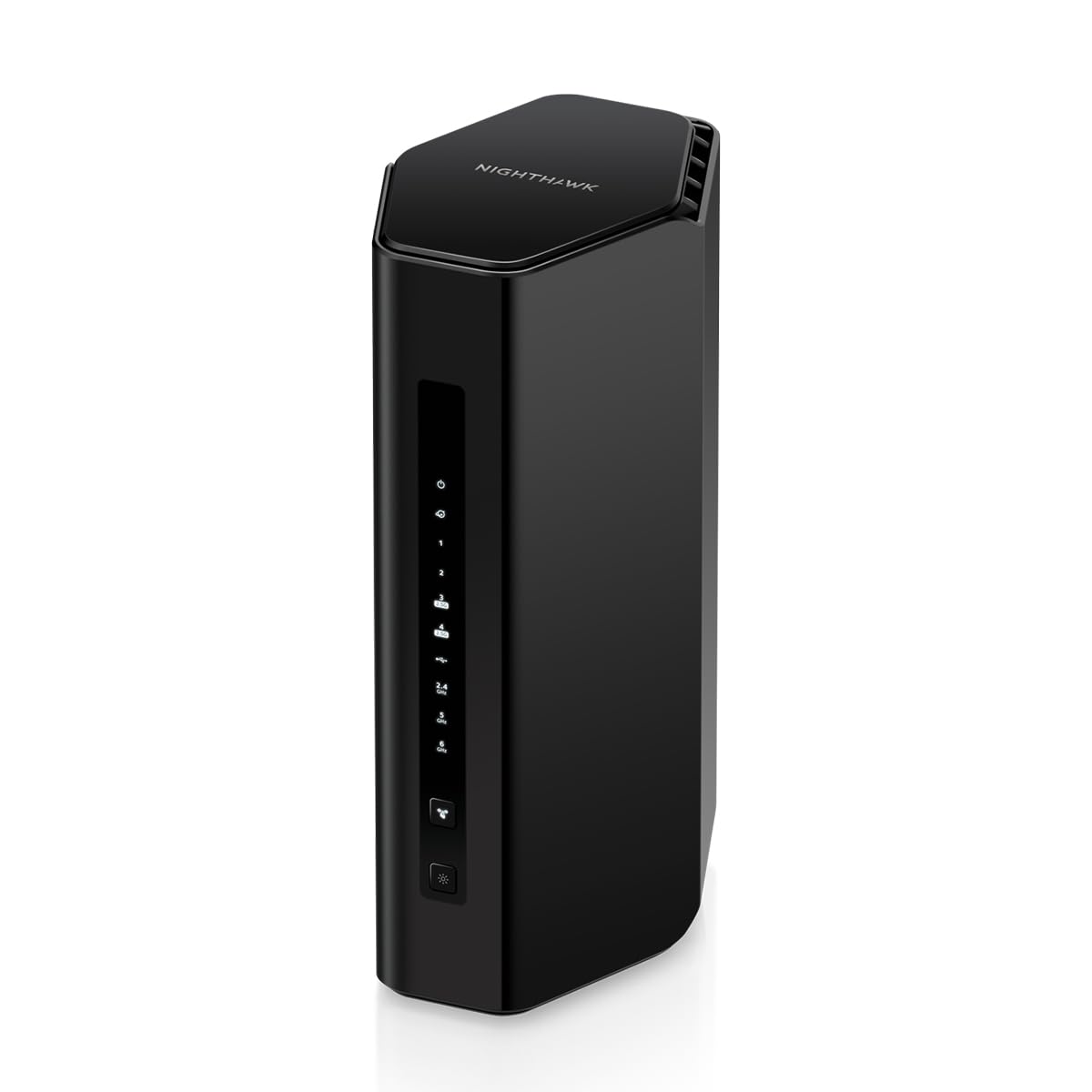
NETGEAR Nighthawk WiFi 7
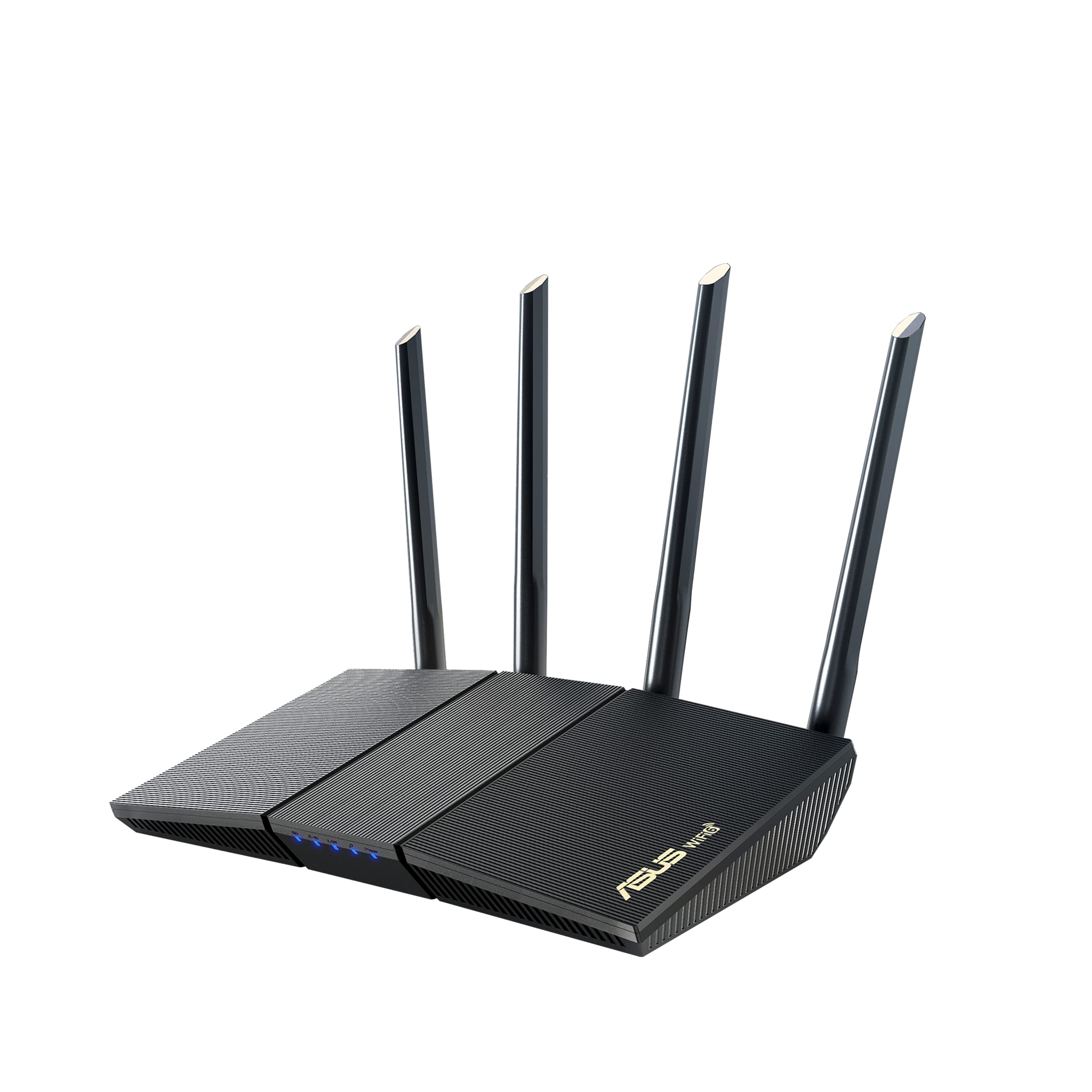
ASUS RT
So, you’re looking to upgrade your home’s internet experience, and the world of routers can feel like a maze. You’ve probably heard the buzzwords: WiFi 6, WiFi 7, gigabit speeds, mesh networks. It’s enough to make anyone’s head spin! Today, we’re diving deep into two compelling options that represent the cutting edge of home networking: the NETGEAR Nighthawk WiFi 7 Router and the ASUS RT-AX1800S Dual Band WiFi 6 Extendable Router. These aren’t just routers; they are gateways to a faster, more stable online life, promising to handle everything from intense gaming sessions to seamless 4K streaming and endless video calls.
But which one is right for you? The NETGEAR Nighthawk WiFi 7 stands tall as a pioneer of the next generation, boasting WiFi 7 speeds that sound like they belong in a sci-fi movie. On the other hand, the ASUS RT, while championing the still-very-impressive WiFi 6 standard, brings a reputation for reliability and user-friendliness to the table, often at a more accessible price point. This comparison is crucial because choosing the right router isn’t just about having the latest tech; it’s about finding a device that perfectly fits your household’s needs, your internet plan, and your budget. We’ll break down their capabilities, explore their strengths and weaknesses, and help you understand which of these formidable networking machines deserves a spot in your home. Get ready to understand what makes these routers tick and which one will be your ultimate online companion.
In-Depth Look: NETGEAR Nighthawk WiFi 7
NETGEAR Nighthawk WiFi 7 Router – Router Only, 9.3Gbps Wireless Speed, 2.5 Giga
Alright, let’s talk about the big hitter – the NETGEAR Nighthawk WiFi 7. When you see “Nighthawk,” you expect speed, and this router doesn’t disappoint. It’s built for the future, packed with WiFi 7 technology, which is a pretty significant leap from what most of us are used to. Think of it as going from a highway to a hyperloop for your internet data. With a theoretical maximum speed of 9.3Gbps, this router is designed to eliminate those frustrating buffering wheels and laggy game moments, even with a house full of devices all clamoring for bandwidth. It’s the kind of performance that makes you sit back and go, “Wow, that’s what the internet is supposed to feel like!”
One of the most exciting aspects of WiFi 7 is its ability to handle more devices simultaneously with much greater efficiency. This means that if you’ve got a home filled with smart gadgets, multiple people streaming in 4K, a gamer trying to get the lowest ping, and someone else on a video conference, the NETGEAR Nighthawk WiFi 7 is engineered to manage all of that without breaking a sweat. It’s built with these demanding scenarios in mind, making it a solid investment for anyone who relies heavily on their internet connection.
The design is also something to note. NETGEAR has opted for a sleeker, more compact body for this Nighthawk, which is a nice change of pace from some of the more imposing routers of the past. It’s designed to blend in a bit better while still packing high-performance antennas that promise coverage for up to 2,500 square feet. That’s a pretty decent area, and for many homes, this could mean ditching those Wi-Fi extenders that often cut your speed in half. The inclusion of a 2.5 Gig internet port is also a big plus. If your internet service provider offers speeds above 1Gbps, this port is crucial for actually getting the most out of that speedy connection. It’s important to remember that this is a router only, meaning you’ll need a separate cable modem if you don’t already have one that’s compatible with your ISP.
Security is a big concern for everyone these days, and NETGEAR has included its NETGEAR Armor suite. It offers a robust set of tools to help protect your network from threats like hackers, malware, and identity theft. While it comes with a 30-day trial, it’s a good starting point for understanding the level of protection it offers. Managing all these features is also made easier with the Nighthawk app, which streamlines setup and day-to-day management. This is particularly helpful for those who aren’t network engineers and want a straightforward way to keep their network running smoothly and securely.
Key Features Analysis:
- Blazing-Fast WiFi 7 Speeds: Up to 9.3Gbps, providing unparalleled performance for demanding applications like high-end gaming and 8K streaming.
- 2.4x Faster Than WiFi 6: A significant generational upgrade that enhances speed, reduces latency, and improves capacity.
- Router Only: Requires a separate cable modem; works with any ISP.
- Compact Design with High-Performance Antennas: Offers substantial coverage (up to 2,500 sq. ft.) in a smaller footprint.
- 2.5 Gig Internet Port: Essential for households with multi-gig internet plans to achieve maximum speeds.
- NETGEAR Armor Security: Comprehensive online protection with a 30-day trial, guarding against various cyber threats.
- Nighthawk App: Simplifies setup, management, and monitoring of your network.
Pros:
- Cutting-Edge Technology: WiFi 7 is the latest standard, ensuring future-proofing and maximum performance.
- Incredible Speed: Capable of delivering speeds that most current internet plans can’t even touch, ready for future upgrades.
- Excellent for High-Demand Users: Perfect for households with many connected devices, heavy streamers, and serious gamers.
- Robust Security Features: NETGEAR Armor provides peace of mind for online safety.
- Easy Management: The Nighthawk app makes setup and control user-friendly.
Cons:
- Pricey: As a premium, next-gen device, it comes with a significant cost.
- Requires Existing Modem: Not an all-in-one solution; you need a separate modem.
- Potential Overkill for Some: If you have a basic internet plan and only a few devices, you might not see the full benefit of WiFi 7 yet.
Customer Reviews Insights:
“We upgraded our internet service to 2gig and then realized all of our hardware was not going to take advantage of it. So we went with the BE900 and it was easy to set up and get that part of the overall hardware upgrade done. The speed is incredible…”
– Satisfied User
“The NETGEAR Nighthawk BE9300 is quick, reliable, and easy to set up. Coverage is strong and stays stable throughout my home, even with lots of devices streaming and gaming at once. It’s pricey, but the performance upgrade is worth it if you want top-tier WiFi 7.”
– Tech Enthusiast
“This was such a good purchase. I’ve had this router over a year now. Everything connects to it seamlessly with the exception of one device… But this router keeps all our devices safe. It blocks links that are spam or suspicious. We have had zero account compromised while running this. And it’s super simple to setup.”
– Long-Term User
In-Depth Look: ASUS RT
ASUS RT-AX1800S Dual Band WiFi 6 Extendable Router, Subscription-Free Network Se
Now, let’s shift our focus to the ASUS RT-AX1800S. This router represents a different segment of the market, focusing on delivering robust WiFi 6 performance in a more accessible package. While WiFi 7 is the shiny new toy, WiFi 6 is far from obsolete; in fact, it’s the standard that’s powering most of the devices we use daily. The ASUS RT is designed to be a workhorse, offering excellent performance for everyday tasks and a significant upgrade from older WiFi standards. It’s the kind of router that provides a stable, reliable connection without requiring you to mortgage your house.
The RT-AX1800S boasts dual-band WiFi 6 capabilities with speeds up to 1800Mbps. This is a substantial speed jump over WiFi 5, especially when it comes to efficiency and handling multiple devices. It utilizes technologies like MU-MIMO and OFDMA, which are crucial for modern, connected homes. Think of OFDMA as a smart traffic manager for your Wi-Fi, allowing the router to communicate with multiple devices simultaneously on different channels, thus reducing congestion and increasing overall throughput. This means fewer dropped connections and smoother performance, even when your family is all online at once.
One of the standout features of ASUS routers, and the RT-AX1800S is no exception, is the emphasis on security and user-friendliness. It comes with AiProtection Classic, powered by Trend Micro, which offers commercial-grade security to protect your home network from online threats. What’s particularly appealing is that this protection is subscription-free. Additionally, the ASUS Instant Guard feature provides a one-click secure VPN connection, which is incredibly handy if you ever need to access your home network securely while you’re away. This level of built-in security, without ongoing fees, is a big win for many users.
The connectivity options on the ASUS RT are also worth noting. It features five Gigabit ports: one WAN port and four LAN ports. This is ample for most homes, allowing you to connect wired devices like computers, gaming consoles, or smart TV hubs with high-speed connections. While it might not have the 2.5Gbps WAN port of the Nighthawk, its Gigabit ports are more than sufficient for internet plans up to 1Gbps, which is still the standard for many households. The ease of setup and the clean, intuitive user interface are consistently praised by users, making it a great option for those who want a router that “just works” without a steep learning curve.
Key Features Analysis:
- New-Gen WiFi 6 Standard: Supports 802.11ax with MU-MIMO and OFDMA for improved efficiency and throughput.
- Ultra-Fast WiFi Speed: Up to 1800Mbps (1.8Gbps) with 1024-QAM for faster wireless connections.
- Increased Capacity and Efficiency: Effectively manages multiple devices simultaneously.
- 5 Gigabit Ports: One WAN and four LAN ports for robust wired connectivity.
- Subscription-Free Security: AiProtection Classic for network protection and Instant Guard VPN for secure remote access.
- Extendable Router: Can be part of an ASUS AiMesh system for expanded coverage if needed.
Pros:
- Excellent Value: Offers strong WiFi 6 performance at a competitive price point.
- Subscription-Free Security: Comprehensive protection without ongoing costs.
- User-Friendly: Easy to set up and manage with a clean interface.
- Reliable Performance: Delivers stable connections and good coverage for its class.
- Good Wired Connectivity: Multiple Gigabit ports accommodate various wired devices.
Cons:
- WiFi 6, Not WiFi 7: While capable, it doesn’t offer the bleeding-edge speeds of WiFi 7.
- Lower Maximum Speed: The 1800Mbps limit is significantly less than the Nighthawk’s potential.
- No 2.5Gbps Internet Port: Limits potential throughput if you have an internet plan exceeding 1Gbps.
Customer Reviews Insights:
“This is a really nice router, especially at this price point. Setup was straightforward, and the user interface is clean and easy to navigate — whether you’re adjusting basic settings or diving into more advanced options. So far, it’s been rock-solid in terms of reliability. Good range, stable connections, and noticeably faster performance compared to my older WiFi 5 router. I haven’t had to reboot or troubleshoot once since installing it.”
– Budget-Conscious User
“My son made it this is apartment at school. his apartment is around 1000 ft.², two bedroom, the Wi-Fi service provided by the apartment complex was not adequate for him and his roommate. He was struggling with getting the Wi-Fi to work for his classes. This was recommended and it increased the coverage in his entire apartment as well as the capacity. It was compatible with his Internet service. It was easy to install and made a huge difference. I would recommend this to anyone looking for better”
– Parent
“Most consumers only care about speed and affordability when it comes to routers, but [this one] provides excellent performance and great value for the price. I’ve been impressed with its stability and the user-friendly interface.”
– Smart Shopper
Head-to-Head Comparison
Let’s get down to brass tacks and see how the NETGEAR Nighthawk WiFi 7 and the ASUS RT stack up against each other in the most important categories.
Next-Gen Speed: WiFi 7 vs. WiFi 6
This is the most significant difference. The NETGEAR Nighthawk WiFi 7 is built on the brand-new WiFi 7 standard, promising theoretical speeds of up to 9.3Gbps. This means it’s designed to handle massive data streams with incredibly low latency. On the other hand, the ASUS RT uses WiFi 6, with a maximum speed of 1800Mbps (1.8Gbps). While WiFi 6 is excellent and provides a substantial upgrade for most users, WiFi 7 is a leap forward, offering 2.4x faster speeds than WiFi 6 and significantly improving efficiency, especially in crowded wireless environments. If future-proofing and raw speed are your absolute top priorities, the Nighthawk WiFi 7 is the clear winner here.
Internet Connectivity: The Gateway Speed
The NETGEAR Nighthawk WiFi 7 comes equipped with a 2.5 Gig internet port. This is crucial for users who have subscribed to internet plans offering speeds above 1Gbps. Without a 2.5Gbps port, you simply can’t utilize those multi-gigabit speeds. The ASUS RT, in contrast, features a standard Gigabit WAN port. This means its maximum input speed from your modem is limited to 1Gbps. If your internet service plan is 1Gbps or lower, the ASUS RT’s port is perfectly adequate. However, if you’re looking to leverage faster plans, the Nighthawk’s 2.5Gbps port is a significant advantage.
Device Capacity and Efficiency
Both routers employ advanced technologies to handle multiple devices. The ASUS RT explicitly mentions MU-MIMO and OFDMA, which are core WiFi 6 features for efficient multi-device communication. WiFi 7, as implemented in the Nighthawk, inherently offers even more advanced channel utilization and greater capacity for handling a dense number of devices concurrently. While both can manage a busy household, the Nighthawk WiFi 7, with its newer standard, is built for higher density and even greater efficiency, which will become increasingly important as more IoT devices enter our homes.
Security Features: Protection for Your Network
Security is paramount, and both brands offer strong solutions. The NETGEAR Nighthawk WiFi 7 includes NETGEAR Armor, a comprehensive security suite that provides robust protection against various online threats. However, it comes with a 30-day trial, after which a subscription fee may apply. The ASUS RT offers AiProtection Classic, powered by Trend Micro, which provides commercial-grade security features. A significant advantage here is that ASUS’s AiProtection is subscription-free, offering ongoing protection without additional costs. ASUS also includes Instant Guard for a secure VPN connection. For those who prefer a cost-effective, long-term security solution, the ASUS RT might have an edge.
Coverage and Design
The NETGEAR Nighthawk WiFi 7 boasts a sleek, compact design and claims coverage for up to 2,500 square feet with its high-performance antennas. This is a solid range for many homes. The ASUS RT doesn’t specify an exact coverage area, but it’s generally designed for apartments and medium-sized homes. Its external antennas help distribute the signal effectively. The Nighthawk’s smaller footprint might be appealing for those looking to minimize clutter, while the ASUS RT’s design is more typical of a home router. Both are “router only” devices, meaning they don’t include a modem.
Value and Price Point
Here’s where the two diverge significantly. The NETGEAR Nighthawk WiFi 7, being at the forefront of WiFi 7 technology, is a premium product with a premium price tag. It’s an investment for those who demand the absolute best and are looking to future-proof their network. The ASUS RT-AX1800S, on the other hand, is positioned as a high-value product. It offers excellent WiFi 6 performance, reliable security, and user-friendly features at a much more accessible price point. For users who need a strong, dependable upgrade without breaking the bank, the ASUS RT is the clear choice.
Frequently Asked Questions
Q: Which router is better for gaming?
A: For serious gamers prioritizing the lowest latency and highest potential speeds, the NETGEAR Nighthawk WiFi 7 is the superior choice due to its WiFi 7 technology and lower latency capabilities. However, the ASUS RT, with its WiFi 6 efficiency and stable connections, is more than capable for casual gaming and most online gaming experiences, especially if your internet plan doesn’t exceed 1Gbps.
Q: Do I need WiFi 7 right now?
A: You likely don’t need WiFi 7 right now for most devices, as the majority of smartphones, laptops, and smart home devices currently support WiFi 6 or older standards. However, if you have a multi-gigabit internet plan or want to ensure your network is ready for the next wave of devices and applications, the NETGEAR Nighthawk WiFi 7 offers that future-proofing. The ASUS RT with WiFi 6 is perfectly adequate for current needs and will continue to perform well for years to come.
Q: Which router is easier to set up?
A: Both routers are generally considered user-friendly, especially with their respective mobile apps (Nighthawk app for NETGEAR, ASUS Router app for ASUS). Customer reviews for the ASUS RT often highlight its exceptionally intuitive interface and straightforward setup process. The NETGEAR Nighthawk WiFi 7 also benefits from the Nighthawk app, which simplifies things, but the sheer number of advanced features might present a slightly steeper, though still manageable, learning curve for absolute beginners.
Q: Which router offers better security features?
A: Both routers offer robust security. The NETGEAR Nighthawk WiFi 7 has NETGEAR Armor, a comprehensive suite that’s very effective but has a trial period. The ASUS RT has AiProtection Classic, which is subscription-free and includes features like malicious site blocking and infected device prevention, along with the handy Instant Guard VPN. For ongoing, cost-effective security, the ASUS RT might be preferred. For a more extensive, potentially subscription-based advanced suite, the NETGEAR Nighthawk WiFi 7 with Armor is a strong contender.
Q: Can these routers work with my existing modem?
A: Yes, both the NETGEAR Nighthawk WiFi 7 and the ASUS RT are “router only” devices, meaning they do not contain a built-in modem. They are designed to connect to your existing cable or fiber modem provided by your Internet Service Provider (ISP). Ensure your current modem is compatible with your ISP and has the necessary ports (like coaxial for cable) to provide internet service to the router.
Q: Which router is better for a large home?
A: The NETGEAR Nighthawk WiFi 7 explicitly states coverage for up to 2,500 sq. ft., which is substantial. While the ASUS RT doesn’t provide a specific square footage, it’s generally suitable for apartments and medium-sized homes. If you have a very large home or multiple floors with thick walls, you might eventually consider a mesh system. However, for its stated coverage area, the NETGEAR Nighthawk WiFi 7 is engineered for broader reach within its single unit capabilities.
Final Verdict: Which One Should You Choose?
The choice between the NETGEAR Nighthawk WiFi 7 and the ASUS RT-AX1800S boils down to your priorities, your internet speed, and your budget.
If you’re an early adopter, a power user who demands the absolute fastest speeds and lowest latency for the most demanding applications, and you have a multi-gigabit internet plan, then the NETGEAR Nighthawk WiFi 7 is the clear path forward. It represents the cutting edge of wireless technology, offering unparalleled speed and efficiency that will keep you ahead of the curve for years to come. It’s an investment in future-proofing your home network with the latest and greatest that WiFi has to offer. You’re paying for performance and the privilege of being on the bleeding edge.
However, if you’re looking for a robust, reliable, and significantly faster internet experience without needing the absolute fastest speeds currently available, or if you have a 1Gbps or slower internet plan, the ASUS RT-AX1800S is an outstanding choice. It delivers excellent WiFi 6 performance, handles multiple devices with ease, provides strong subscription-free security, and does it all at a much more approachable price point. It’s the smart shopper’s pick for a substantial upgrade that offers incredible value and dependable performance for everyday tasks, streaming, and casual gaming.
Ultimately, both are fantastic routers, but they cater to different needs and budgets. Consider your current internet speed, the number and type of devices you use, and how much you’re willing to invest in your home’s digital backbone.
Ready to upgrade your connection?
Click the links below to get the best deal on your new router!



