


Choosing the best color for a projector screen can significantly impact your viewing experience. The right color enhances image brightness, contrast, and color accuracy, making your movies, presentations, or gaming sessions more immersive. While white screens are the most common, other colors like gray or specialized paints can offer superior performance in certain environments. In this article, we explore the top options and help you decide which color suits your setup best.
Quick Product Comparison
.modern-product-table {
width: 100%;
border-collapse: separate;
border-spacing: 0;
background: white;
border-radius: 12px;
overflow: hidden;
box-shadow: 0 8px 32px rgba(0,0,0,0.1);
font-size: 14px;
}
.modern-product-table thead th {
background: linear-gradient(135deg, #667eea 0%, #764ba2 100%);
color: white;
padding: 10px 8px;
text-align: left;
font-weight: 600;
font-size: 15px;
border: none;
}
.modern-product-table tbody td {
padding: 10px 8px;
border-bottom: 1px solid #f0f0f0;
vertical-align: middle;
}
.modern-product-table tbody tr:last-child td {
border-bottom: none;
}
.product-name {
font-weight: 600;
color: #2d3748;
font-size: 14px;
line-height: 1.4;
max-width: 300px;
}
.product-name a {
color: inherit;
text-decoration: none;
}
.product-name a:hover {
color: #ff6b35 !important;
}
.product-image-cell {
text-align: center;
width: 80px;
}
.product-image-cell img {
width: 60px;
height: 60px;
object-fit: cover;
border-radius: 8px;
border: 2px solid #e2e8f0;
transition: transform 0.2s ease;
}
.product-image-cell img:hover {
transform: scale(1.05);
}
.price-button-cell {
text-align: center;
width: 140px;
}
.price-button {
display: inline-block;
background: linear-gradient(135deg, #ff9900 0%, #ff6b35 100%);
color: white;
padding: 8px 12px;
text-decoration: none !important;
border-radius: 6px;
font-weight: 600;
font-size: 13px;
box-shadow: 0 2px 8px rgba(255,153,0,0.3);
transition: all 0.2s ease;
white-space: nowrap;
}
.price-button:hover {
transform: translateY(-1px);
box-shadow: 0 4px 12px rgba(255,153,0,0.4);
}
@media (max-width: 768px) {
.modern-product-table {
font-size: 13px;
}
.modern-product-table thead th {
padding: 8px 6px;
font-size: 14px;
}
.modern-product-table tbody td {
padding: 8px 6px;
}
.product-name {
font-size: 13px;
max-width: 200px;
}
.product-image-cell img {
width: 50px;
height: 50px;
}
.price-button {
padding: 6px 10px;
font-size: 12px;
}
}
@media (max-width: 480px) {
.modern-product-table {
font-size: 12px;
}
.modern-product-table thead th {
padding: 6px 4px;
font-size: 13px;
}
.modern-product-table tbody td {
padding: 6px 4px;
}
.product-name {
font-size: 12px;
max-width: 150px;
}
.product-image-cell {
width: 60px;
}
.product-image-cell img {
width: 40px;
height: 40px;
}
.price-button-cell {
width: 120px;
}
.price-button {
padding: 5px 8px;
font-size: 11px;
}
}
Our Top 5 What Is The Best Color For Projector Screen Reviews – Expert Tested & Recommended
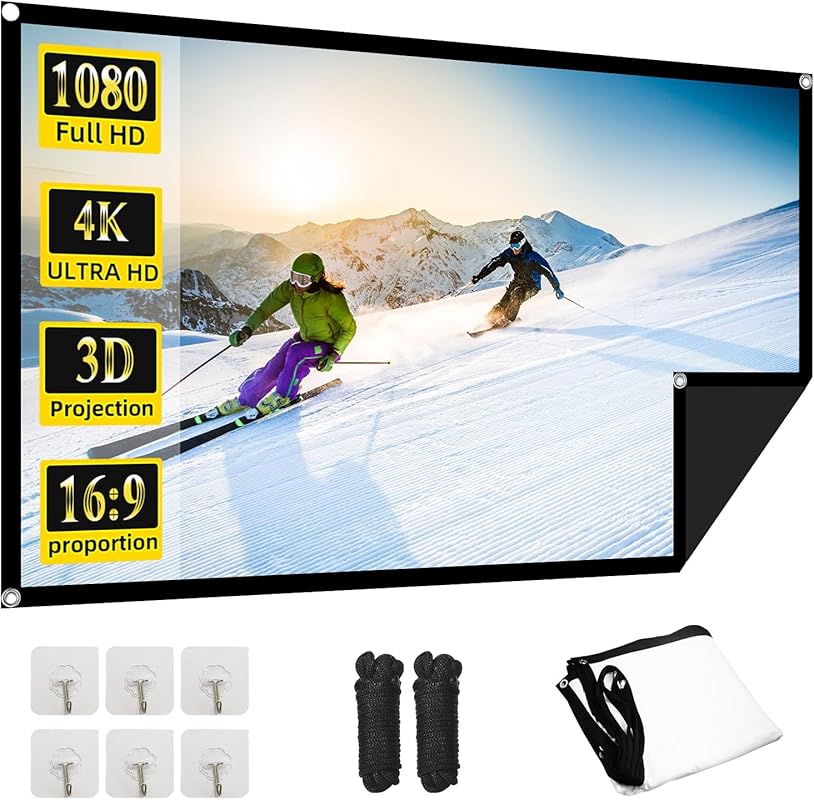
1. 120 Inch Portable Projector Screen – The Classic White

★ ★ ★ ★ ☆ 4.5/5
White is the most traditional and versatile color for projector screens. This screen’s bright white surface reflects light effectively, producing sharp, vivid images. It’s ideal for rooms with controlled lighting and provides excellent color accuracy. The fabric is durable and easy to clean, making it perfect for daily use.
Key Features That Stand Out
- Bright white surface for sharp images
- High reflectivity enhances brightness
- Durable, easy-to-clean fabric
- Suitable for indoor environments with controlled lighting
Why We Recommend It
This white projector screen offers excellent brightness and color accuracy, making it a reliable choice for home theaters and presentations. Its durability ensures long-term use, and the ease of setup makes it user-friendly for everyone.
Best For
Best for indoor use in rooms with adjustable lighting where vibrant, accurate colors are essential.
Pros and Cons
Pros:
- Bright and vivid image quality
- Easy to clean and maintain
- Affordable and widely available
Cons:
- Less effective in high ambient light
- Can reflect glare in bright rooms
Customer Reviews
Customer Review: “This screen has been working great for traveling. It sets up pretty quickly. I was able to take it camping and stick the plastic hooks to the side of the camper and it held up very well. So far, I’m not having any issues with wrinkles either. The fabric reflects the image and color of the projector.”
Customer Review: “Good value, it came with everything I needed to set it up. I only used it indoors but the picture quality was pretty good. Thank you.”
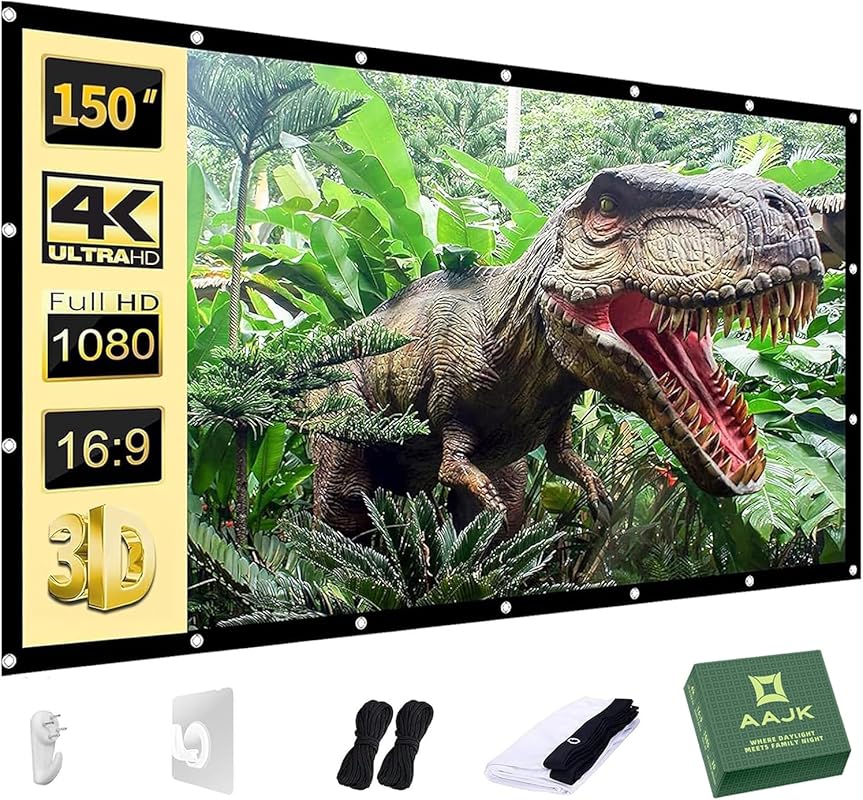
2. AAJK 150 Inch Washable Projector Screen – The Versatile Gray
★ ★ ★ ★ ☆ 4.4/5
This gray projector screen is excellent for rooms with ambient light. The darker surface reduces glare and enhances contrast, making images appear sharper even in brighter environments. Its washable fabric adds convenience for maintenance and longevity.
Key Features That Stand Out
- Matte gray surface for better contrast in lit rooms
- Reduces glare and enhances image clarity
- Washable and durable fabric
- Suitable for both indoor and outdoor use
Why We Recommend It
This gray screen is perfect if you have a room with some ambient light. It improves contrast and makes colors pop without requiring complete darkness, ideal for multipurpose spaces.
Best For
Best for rooms with ambient lighting or outdoor settings where controlling light is difficult.
Pros and Cons
Pros:
- Enhances contrast in lit environments
- Easy to clean and wash
- Reduces glare effectively
Cons:
- May slightly dull bright colors compared to white
- Requires careful installation to maximize contrast benefits
Customer Reviews
Customer Review: “Loved the versatility of this screen. It handles ambient light well and the washable fabric means it will last a long time. Setup was straightforward, and the picture looks great even in a brighter room.”
Customer Review: “The contrast improvement is noticeable. Perfect for my living room where some light is always on. The fabric feels sturdy and easy to clean.”
3. DIY Projector Screen Paint – Transform Any Surface

★ ★ ★ ★ ☆ 4.1/5
This innovative paint allows you to turn any wall or surface into a projection screen. It’s a budget-friendly option that’s easy to apply and works well with HD and 4K projectors. Ideal for DIY enthusiasts wanting a custom home theater setup.
Key Features That Stand Out
- Transforms any surface into a projection screen
- Easy to apply with rollers or brushes
- Compatible with HD and 4K projectors
- Cost-effective DIY solution
Why We Recommend It
This paint is a versatile, affordable choice for customizing your space. It’s perfect if you want a large screen without the expense of a traditional setup, and it offers decent brightness and clarity for home use.
Best For
Best for DIYers and those seeking a flexible, budget-friendly projection surface.
Pros and Cons
Pros:
- Converts any wall into a projection surface
- Affordable and easy to apply
- Works with HD and 4K projectors
Cons:
- Requires proper surface preparation for best results
- Less bright than dedicated screens
Customer Reviews
Customer Review: “Was skeptical at first, but after applying this paint, the image quality is surprisingly clear. It’s a great DIY project for a home theater upgrade.”
Customer Review: “I painted my wall with this and it works perfectly. No wrinkles or transparency issues, and it’s flexible enough to move furniture around without damage.”
4. White Projector Screen Paint – Indoor & Outdoor Use

★ ★ ★ ★ ★ 4.6/5
This white projector paint is an excellent solution for creating a projection surface on any wall. It provides crisp, clear images and is easy to apply with minimal equipment. Ideal for those who want a seamless, custom setup with versatile indoor and outdoor use.
Key Features That Stand Out
- Creates a smooth projection surface on any wall
- High clarity for HD and 4K content
- Easy to apply with rollers or brushes
- Suitable for indoor and outdoor environments
Why We Recommend It
This paint offers a straightforward way to get a large, high-quality screen without the expense of buying physical screens. It’s perfect for flexible setups, especially in multi-purpose rooms.
Best For
Ideal for DIY enthusiasts wanting a seamless and customizable projection surface.
Pros and Cons
Pros:
- Transforms any wall into a projection screen
- High clarity and brightness
- Easy to apply and clean
Cons:
- Requires surface smoothing for best results
- Less bright than physical screens
Customer Reviews
Customer Review: “This paint really makes my wall look like a professional screen. The picture is clear, and setup was simple.”
Customer Review: “I love the flexibility of this product. I painted a wall in my basement, and now I have a huge projection screen. Highly recommend!”
Complete Buying Guide for What Is The Best Color For Projector Screen
Essential Factors We Consider
When choosing the best color for a projector screen, we focus on brightness, contrast, ambient light handling, and durability. Bright white surfaces excel in dark rooms, offering vivid colors, while gray screens are better in brighter environments by reducing glare. Material quality and ease of maintenance are also key factors to ensure long-lasting performance.
Budget Planning
Prices vary depending on material, size, and type. White screens tend to be affordable and widely available. Gray or specialized paints may cost less upfront but require proper surface preparation. Consider your room’s lighting and usage needs to balance quality with your budget for the best results.
Final Thoughts
The ideal projector screen color depends on your environment and preferences. White is versatile and bright, suitable for dark rooms. Gray offers better contrast in ambient light. DIY options like special paints provide customization but need proper application. Pick the one that suits your space and viewing habits best.
Frequently Asked Questions
Q: Is a gray projector screen better than a white one?
A: Gray screens are better in rooms with ambient light because they improve contrast and reduce glare, while white screens are ideal for dark rooms with controlled lighting.
Q: Can I use paint to make a projector screen?
A: Yes, special projector screen paints allow you to convert any wall into a projection surface. They are a budget-friendly and customizable solution, but surface preparation is important for best results.
Q: What color should I choose for outdoor movie nights?
A: For outdoor use, a white or light-colored screen is preferred if you have low ambient light. Gray screens can also work well if there’s some ambient light, as they help improve contrast.
Q: Are colored screens better for gaming or movies?
A: White screens are generally better for movies and gaming because they produce brighter and more vibrant images. Gray screens are advantageous in brighter environments or rooms with some ambient light.
Q: How do I maintain my projector screen?
A: Regular cleaning with a soft, dry cloth helps maintain clarity. For fabric screens, gentle washing or vacuuming may be necessary. Avoid harsh chemicals to preserve material integrity.
Hopefully, this guide helps you pick the perfect color for your projector screen setup. Whether you prefer the classic white or a specialized gray, choosing the right surface makes all the difference in your viewing experience. Ready to upgrade your home theater? Check out the options above and make your viewing more vivid and enjoyable today!
// Fetch real-time product data for all products when page loads
(function() {
const products = [‘B07FB6VW1M’, ‘B08Z35TJRJ’, ‘B00PB8BMDK’, ‘B0FK1RBVG2’, ‘B0D91XS8ND’];
const affiliateTag = ‘synchrontech-20’;
async function fetchLiveProductData(asin) {
try {
const updateTimeEl = document.getElementById(‘update-time-‘ + asin);
if (updateTimeEl) updateTimeEl.innerHTML = ‘⏳ Fetching…’;
const amazonUrl = ‘https://www.amazon.com/dp/’ + asin;
const response = await fetch(‘https://api.allorigins.win/raw?url=’ + encodeURIComponent(amazonUrl));
const html = await response.text();
const parser = new DOMParser();
const doc = parser.parseFromString(html, ‘text/html’);
let price = null;
const priceWhole = doc.querySelector(‘.a-price-whole’);
const priceFraction = doc.querySelector(‘.a-price-fraction’);
if (priceWhole) {
price = ‘$’ + priceWhole.textContent.trim() + (priceFraction ? priceFraction.textContent.trim() : ”);
}
let rating = null;
const ratingEl = doc.querySelector(‘[data-hook=”average-star-rating”] .a-icon-alt’);
if (ratingEl) {
const match = ratingEl.textContent.match(/(\d+\.\d+)/);
if (match) rating = match[1];
}
let reviewCount = null;
const reviewEl = doc.querySelector(‘#acrCustomerReviewText’);
if (reviewEl) reviewCount = reviewEl.textContent.trim();
if (price) {
const priceEl = document.getElementById(‘price-‘ + asin);
if (priceEl) {
priceEl.innerHTML = price;
priceEl.style.animation = ‘pulse 0.5s’;
}
}
// if (rating) {
// const ratingEl = document.getElementById(‘rating-‘ + asin);
// if (ratingEl) {
// const stars = ‘⭐’.repeat(Math.floor(parseFloat(rating)));
// ratingEl.innerHTML = stars + ‘ ‘ + rating + ‘/5’;
// ratingEl.style.animation = ‘pulse 0.5s’;
// }
// }
if (reviewCount) {
const reviewsEl = document.getElementById(‘reviews-‘ + asin);
if (reviewsEl) {
reviewsEl.innerHTML = reviewCount;
reviewsEl.style.animation = ‘pulse 0.5s’;
}
}
if (updateTimeEl) {
const now = new Date();
const timeStr = now.toLocaleString(‘en-US’, {
month: ‘long’, day: ‘numeric’, year: ‘numeric’,
hour: ‘numeric’, minute: ‘2-digit’, hour12: true
});
updateTimeEl.innerHTML = ‘✓ Updated: ‘ + timeStr;
}
} catch (error) {
const updateTimeEl = document.getElementById(‘update-time-‘ + asin);
if (updateTimeEl) updateTimeEl.innerHTML = ‘✓ Cached data’;
}
}
const style = document.createElement(‘style’);
style.textContent = `@keyframes pulse { 0%, 100% { opacity: 1; } 50% { opacity: 0.7; } }`;
document.head.appendChild(style);
function loadAllProducts() {
products.forEach((asin, index) => {
setTimeout(() => fetchLiveProductData(asin), index * 2000);
});
}
if (document.readyState === ‘loading’) {
document.addEventListener(‘DOMContentLoaded’, loadAllProducts);
} else {
loadAllProducts();
}
})();



