


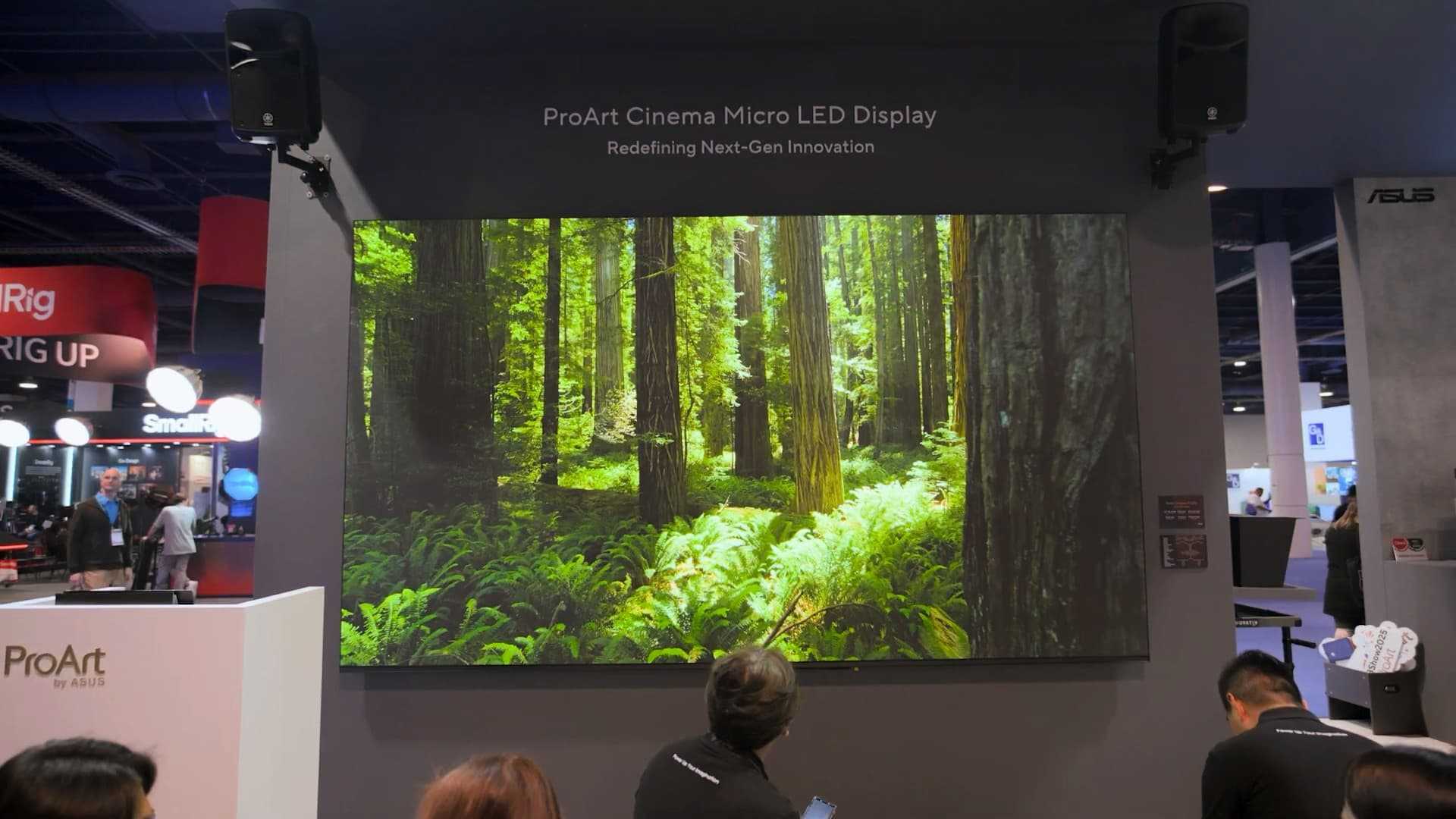
MicroLED monitors are considered the next generation because they combine stunning visuals, improved energy efficiency, and superior durability, setting them apart from traditional displays. Their ability to deliver brighter images with deeper blacks and richer colors makes them a game-changer for visual technology enthusiasts. Additionally, MicroLEDs offer faster response times and better longevity, making them ideal for both gaming and professional use. As display innovation continues to evolve rapidly, MicroLED technology stands out as the future due to its impressive combination of performance, efficiency, and reliability. This cutting-edge technology promises a new era of immersive visual experiences, pushing the boundaries of what screens can do and transforming our digital interactions. If you’re eager to see what makes MicroLED monitors so revolutionary, keep reading to discover why they truly are next gen.

Why Are MicroLED Monitors Considered Next Generation
Introduction to MicroLED Technology
MicroLED technology uses tiny light-emitting diodes to create images on screens. Each microLED is smaller than a human hair, allowing for incredibly detailed displays. These tiny LEDs emit their own light, which means no need for backlighting like older display types. This makes MicroLEDs capable of producing brighter images with richer colors and deeper blacks.
Superior Brightness and Contrast
One of the main reasons MicroLED monitors are seen as future-proof is their impressive brightness levels. They can reach peak lumens higher than traditional displays, making images pop even in well-lit rooms. Plus, because each pixel emits its own light, contrast ratios are vastly improved, offering true blacks and vibrant whites that add depth to images.
How MicroLED Brightness Differs from Other Technologies
MicroLED screens can achieve peak brightness levels of over 1,500 nits. OLED screens, a common next-generation display, usually max out around 1,000 nits. This higher brightness improves visibility outdoors and enhances HDR content, making details clearer and more striking.
Achieving Deeper Blacks and Better Contrast
Since each MicroLED pixel can turn on or off independently, they can produce perfect blacks without light bleed. This results in infinite contrast ratios, which are ideal for watching movies, gaming, and professional photo editing. The richer blacks make colors seem more vivid and realistic.
Color Accuracy and Vibrancy
MicroLED monitors deliver a broader color gamut than many existing display types. They can reproduce a wide range of colors with high precision. This means images look more colorful, lifelike, and closer to how they appear in real life.
Why Colors Matter in MicroLED Displays
Accurate color reproduction is crucial for content creators and enthusiasts who require faithful visuals. MicroLED’s ability to produce rich reds, greens, and blues enhances the viewing experience, making every scene look more detailed and vibrant.
Maintaining Color Consistency Over Time
Unlike some older display types, MicroLEDs resist color degradation. Their tiny LEDs maintain color accuracy for longer periods, ensuring consistent visual quality and reducing the need for calibration or replacement.
Durability and Longevity of MicroLED Monitors
Another reason MicroLED monitors are seen as next gen is their durability. These displays are built to last longer and resist damage better than OLEDs, which can suffer from burn-in.
Resistance to Burn-In and Image Retention
Since MicroLEDs do not rely on organic materials, they are much less prone to burn-in issues. This makes them suitable for static images or long gaming sessions without worrying about ghosting or permanent marks.
Extended Lifespan and Reliability
MicroLEDs have a longer lifespan than OLEDs because they do not degrade as quickly over time. This durability ensures the screen maintains its brightness and color quality for years, making it a smarter investment for consumers.
Energy Efficiency and Environmental Impact
MicroLED technology consumes less power compared to many traditional display types. Because each LED lights up only when needed, energy use is optimized, which is better for the environment and reduces electricity bills.
Power Consumption Comparison
In typical use, MicroLED monitors can use up to 30 percent less power than comparable OLED displays. This efficiency is especially important for portable devices and large-format displays.
Eco-Friendly Manufacturing and Disposal
MicroLEDs do not contain organic materials that degrade or pose environmental risks at disposal. They are built with recyclable materials and have less impact on the planet, making them a sustainable choice for the future.
Design Flexibility and Form Factors
Because MicroLEDs are so small, manufacturers can produce displays in larger, more flexible shapes. This opens the door for innovative designs that are thinner, curved, or even foldable.
Creating Ultra-Thin and Flexible Monitors
MicroLED technology allows for ultra-thin screens with minimal bezels. Flexible displays are also possible, opening up new possibilities for immersive gaming, portable screens, or custom setups.
Large-Scale and Modular Displays
MicroLED tech enables assembling multiple small panels into giant displays without visible seams. These modular designs are perfect for billboards, conference rooms, or home theater walls, creating seamless, high-quality visuals.
Scalability and Manufacturing Advancements
Recent breakthroughs in manufacturing are making MicroLED monitors more accessible and affordable. As production techniques improve, we expect prices to drop and availability to grow.
Challenges in MicroLED Production
Producing millions of tiny LEDs with perfect uniformity is complex. Current manufacturing processes are time-consuming and costly, but ongoing research aims to simplify and scale production.
Future Trends and Market Growth
The industry predicts a significant increase in MicroLED adoption within the next few years. As technology matures, prices will become more competitive, and MicroLEDs will appear in a broader range of consumer electronics.
Comparison with Other Next-Gen Displays
MicroLEDs are often compared with OLEDs and QLEDs. Each technology has its strengths, but MicroLEDs combine the best of both: high brightness, perfect blacks, longevity, and energy efficiency.
MicroLEDs vs. OLEDs
While OLEDs provide excellent contrast and color, they can suffer from burn-in and have a shorter lifespan. MicroLEDs overcome these issues with superior durability and similar visual performance.
MicroLEDs vs. QLEDs
QLEDs use quantum dots with LCD panels to boost color and brightness. MicroLEDs outperform them in contrast, black levels, and longevity, making them a more advanced choice overall.
Real-World Applications of MicroLED Monitors
MicroLED technology is not limited to consumer monitors. It is already making waves in professional environments, entertainment industries, and even automotive displays.
Commercial and Professional Use Cases
High-end conference rooms, digital signage, and control rooms benefit from MicroLED’s brightness, durability, and large sizes. Content creators value their color accuracy and detail.
Consumer Electronics and Gaming
Gaming monitors and premium TVs utilize MicroLEDs for ultra-sharp images and fast response times. The immersive experience is further enhanced by wide viewing angles and vivid visuals.
Automotive Displays and Wearables
MicroLEDs are now appearing in dashboards and heads-up displays due to their resilience and high visibility. Wearable devices such as smartwatches benefit from their compact size and vibrant display capabilities.
As technology advances, MicroLED monitors stand out as the most promising display solution for the future. Their ability to deliver bright, crisp, and long-lasting visuals sets them apart from older and current-generation screens. With ongoing improvements in manufacturing and decreasing costs, MicroLED technology is poised to become the standard in next-generation displays across various industries.
Find Out! How MICRO LED is the Next Generation of Display: Samsung [CES 2023] Unveiled
Frequently Asked Questions
What technological features make MicroLED monitors stand out as a next-generation choice?
MicroLED monitors utilize tiny, self-emitting LEDs that produce vibrant colors and high contrast ratios without the need for backlighting. These features allow for deeper blacks, brighter images, and more accurate color reproduction, setting them apart from traditional displays. Their ability to deliver exceptional image quality improves with larger sizes and higher resolutions, making them ideal for advanced visual experiences.
How does the lifespan of MicroLED monitors compare to older display technologies?
MicroLED monitors offer significantly longer lifespans because they use inorganic LEDs that resist burn-in and degradation over time. Unlike OLEDs, which can suffer from color fading or permanent image retention, MicroLEDs maintain their brightness and color accuracy longer, providing reliable performance over many years. This durability adds to their appeal as a forward-looking display solution.
In what ways do MicroLED monitors improve energy efficiency compared to traditional screens?
MicroLED technology consumes less power because each LED emits light independently, eliminating the need for complex backlighting systems. This efficiency results in lower energy costs and less heat generation, making MicroLED monitors more environmentally friendly and suitable for energy-conscious consumers. Their ability to operate effectively at high brightness levels without excess power use further enhances their appeal.
What are the advantages of MicroLED monitors in terms of viewing angles and image consistency?
MicroLED displays maintain consistent image quality across wide viewing angles because each pixel emits its own light. This means viewers experience accurate colors and contrast regardless of their position relative to the screen. Unlike some other display types, MicroLEDs do not suffer from color shifting or brightness loss when viewed from different angles, ensuring a uniform viewing experience.
In what ways do MicroLED monitors support scalability and customization for different applications?
MicroLED technology allows manufacturers to create large, seamless displays by combining numerous tiny LEDs, making them suitable for applications like digital signage, control rooms, and home theaters. Their modular design enables customization in size, shape, and resolution, providing flexible solutions tailored to specific needs. This scalability ensures MicroLED monitors can adapt to a variety of environments and uses.
Final Thoughts
MicroLED monitors are considered next gen because they offer superior brightness, contrast, and color accuracy compared to traditional displays. Their self-emitting pixels improve energy efficiency and reduce motion blur. This technology also allows for larger, seamless screens with minimal bezels.
In addition, MicroLEDs boast longer lifespan and better durability, making them ideal for the future of visual displays. Their ability to deliver vibrant images in any lighting condition sets them apart from existing options.
Why are microled monitors considered next gen? Because they combine innovative display technology with practicality, providing an enhanced viewing experience. Their advanced features and performance clearly position them as the future of monitors.



