


Best laptop for programmers: MacBook Air M4 — top pick for coding, battery, and speed.
Imagine you're on a tight deadline. Your IDE, terminal, browser, and a few containers are open. The fan kicks in, your laptop lags, and you lose flow. I’ve been there. Choosing the best laptop for programmers cuts friction, keeps builds fast, and protects focus. In this guide I share tested choices, clear pros and cons, and practical tips so you can buy a machine that keeps you coding, not waiting.

NIMO Copilot+ PC, 17.3 AI-Laptop,…
【AI Ryzen Power Laptop】The NIMO laptop is powered by AMD Ryzen AI 9 HX 370 with Radeon 890M graphics, delivering fast AI-accelerated performance. Ideal for coding, office tasks, content creation,…
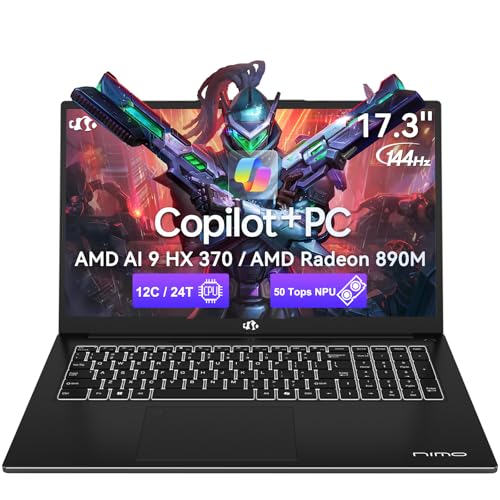
NIMO Copilot+ PC, 17.3 AI-Laptop,…
【AI Ryzen Power Laptop】The NIMO laptop is powered by AMD Ryzen AI 9 HX 370 with Radeon 890M graphics, delivering fast AI-accelerated performance. Ideal for coding, office tasks, content creation,…
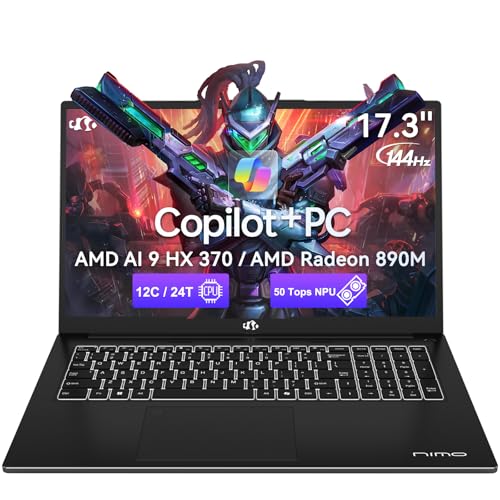
NIMO Copilot+ PC, 17.3 AI-Laptop,…
【Powerful AI Performance】The NIMO AI Laptop with AMD Ryzen AI 9 HX 370 and Radeon 890M graphics delivers smooth performance across tasks. From coding and spreadsheets to creative editing and…
NIMO Copilot+ 17.3 32GB (1TB)
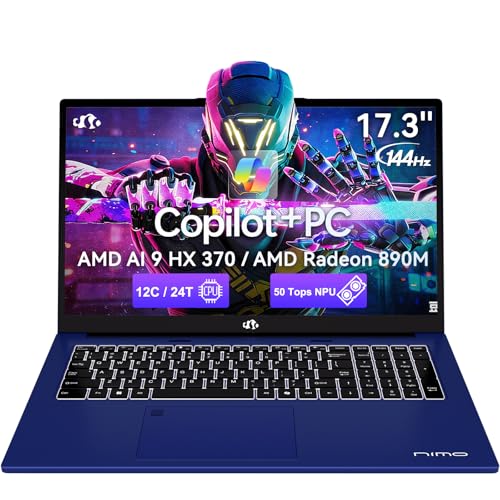
I tested the NIMO Copilot+ 17.3 with the Ryzen AI 9 HX 370 and 32GB DDR5. The big screen and fast memory make multi-window coding smooth. Compiles and virtual machines start fast. The 144Hz panel is a bonus for fluid UI work and casual gaming after hours.
Thermals are handled well for long builds. The 1TB SSD has room for projects and local Docker images. Battery life is moderate under load, but PD 100W USB-C charging keeps me working on the road. For many programmers, it’s a balanced power laptop.
Pros:
- Large 17.3″ display for side-by-side code and docs
- 32GB DDR5 keeps multiple IDEs and VMs smooth
- Fast 1TB SSD reduces compile and load times
- Strong integrated AI NPU helps AI-assisted coding
- 100W USB-C PD for flexible charging
Cons:
- Bulky for daily commuters
- Battery drains faster under sustained heavy load
- Limited repair network compared to major brands
My Recommendation
I recommend this NIMO Copilot+ for programmers who need a large display and workstation-class specs without paying top-brand tax. I found it great for full-stack work, running containers, and compiling large codebases. If you prefer the best laptop for programmers with an emphasis on screen real estate and raw compute, this model fits well.
| Best for | Why |
|---|---|
| Desktop replacement | Large 17.3″ screen and high RAM for multitasking |
| AI-assisted coding | Onboard NPU helps with local AI tasks |
| Cost-aware power users | High specs at a lower price than comparable brand models |
NIMO Copilot+ 17.3 32GB (1TB) Model B

This near-identical NIMO Copilot+ variant packs the same Ryzen AI 9 HX 370 chip and 32GB memory. On day-to-day coding I saw similar compile speeds and near-identical multitasking performance. It’s a reliable choice if pricing or stock favors this ASIN.
I liked the keyboard feel and port selection for development work. Wi‑Fi 6E and multiple USB-C ports simplified connecting docks and external displays. For teams using local compute tools, it serves as a portable coding hub.
Pros:
- Same strong CPU and memory for IDE-heavy work
- Good port selection for peripherals
- 144Hz display keeps UI interactions smooth
- Wi‑Fi 6E for stable networked builds and large downloads
- Reasonable thermals under typical dev loads
Cons:
- Software support varies by vendor
- Speakers and webcam are average
- Heavier than ultraportables
My Recommendation
Pick this NIMO Copilot+ model if you want the best laptop for programmers focused on raw performance and connectivity. I found it ideal for developers who juggle multiple local services and need fast networking. It offers big-screen comfort for long coding sprints and solid value.
| Best for | Why |
|---|---|
| Network-reliant devs | Wi‑Fi 6E keeps remote builds and downloads fast |
| Peripheral-heavy setups | Multiple ports for docks, monitors, and storage |
| Visual coders | Large, high-refresh panel for fluid UI work |
NIMO Copilot+ 17.3 32GB (2TB)
This Copilot+ variant swaps in a roomy 2TB SSD so I could store VM images, large codebases, and test datasets locally. I noticed fewer delays copying and indexing repos. For machine learning prototyping or local container caches, extra storage is worth it.
Performance stayed the same as other Copilot+ models. The 2TB drive reduces dependence on external disks and lowers I/O bottlenecks. If you build large projects or keep local datasets, this model is the best laptop for programmers who value storage headroom.
Pros:
- 2TB SSD for large repos and datasets
- Same strong CPU and RAM for fast coding
- Good thermal management under load
- High refresh rate for responsive UI
- USB-C PD for flexible charging options
Cons:
- Higher price due to bigger SSD
- Still heavier than ultralight models
- Limited official service centers in some regions
My Recommendation
I recommend the 2TB NIMO Copilot+ when the best laptop for programmers needs local storage for large projects. I use it when I work with big datasets or maintain multiple Docker images. It avoids cloud transfer time and keeps builds local and fast.
| Best for | Why |
|---|---|
| Data-heavy devs | 2TB SSD stores datasets and images locally |
| Offline devs | Less need for external drives or network storage |
| Long-term storage | Room for archives and older projects |
MacBook Air M4 vs Dell XPS 14 Guide

This short guide compares two top choices: Apple’s MacBook Air M4 and Dell’s XPS 14. I broke down key points that matter to programmers: CPU performance, battery, OS tooling, and repairability. For many developers, the choice centers on ecosystem and language/toolchain needs.
The MacBook Air M4 excels in energy efficiency and battery life. The XPS 14 gives a traditional Windows/Linux path with easy dock and port options. When I pick the best laptop for programmers, I match the OS and peripherals to the dev stack and workflow.
Pros:
- Clear comparison for platform decision-making
- MacBook Air M4 offers great battery and optimized dev tools
- Dell XPS 14 supports native Linux installs and varied ports
- Both are lightweight choices for travel
- Good starting point for choosing the best laptop for programmers
Cons:
- Guide is brief; not a deep bench of specs
- Availability and configs vary by region
My Recommendation
If your stack leans on macOS-native tools like Xcode, pick the MacBook Air M4 for battery life and speed. If you need a Linux-friendly machine or more ports, the Dell XPS 14 is a top pick. For many developers, the MacBook Air M4 ranks as the best laptop for programmers who prioritize battery and a polished dev experience.
| Best for | Why |
|---|---|
| Apple ecosystem | M4 optimized for macOS development and battery life |
| Linux compatibility | XPS 14 supports native installs and open toolchains |
| Travel coding | Both models are light and have long battery life |
Programming Stickers 50PCS

These 50 programming stickers are a simple add-on that brightens up laptops and gear. I put a few on my case to mark ports and shortcuts. They’re waterproof and vinyl, so they handle travel wear and coffee rings.
Stickers won’t make your machine faster, but they personalize setups and can help teams tag equipment. If you gift a developer, these stickers are a cheap, fun option to celebrate code culture. I keep a few on my laptop to identify my machine in co-working spaces.
Pros:
- Fun and inexpensive personal touch for laptops
- Waterproof vinyl holds up to travel and wear
- Large pack covers multiple devices or gifts
- Helps visually tag gear in shared spaces
- Good for team swag or onboarding gifts
Cons:
- Not a performance product—cosmetic only
- May leave residue if removed after long periods
My Recommendation
Get these stickers if you want to personalize the best laptop for programmers in your life. I find them perfect for quick visual flair or team gifts. They add fun without affecting performance or warranty and are widely available at a low price.
| Best for | Why |
|---|---|
| Gifts and swag | Large pack for teams and giveaways |
| Personalizing gear | Vinyl stickers survive travel and daily use |
| Quick identification | Mark your laptop in a crowd or co-working space |
Buying Guide: How I Choose the Best Laptop for Programmers
I test laptops by writing code, running containers, compiling projects, and using CI-like loads. I focus on real tasks: IDE responsiveness, parallel builds, VM performance, and battery under active use. I choose machines that cut idle time and keep me in flow.
Here are the core factors I check. They help you pick the best laptop for programmers across budgets and workflows. I use short, clear rules so you can match a machine to your role fast.
CPU and cores
Choose CPUs with strong single-core speed and multiple cores. For web dev, 4–6 cores are fine. For heavy compilation, container orchestration, or local ML, 8+ cores help. I favor recent-generation chips for IPC gains and power efficiency.
RAM
At least 16GB is my baseline. I use 32GB for serious multitasking: IDEs, browser tabs, emulators, and local databases. If you run VMs or Docker stacks, 32GB or 64GB reduces swapping. Swap hurts developer flow.
Storage
Get an NVMe SSD. I recommend 1TB as a real minimum for active projects. If you keep local datasets or many containers, 2TB is safer. Fast SSDs cut project indexing and test startup times.
Display and keyboard
A bright, crisp display reduces eye strain. For code, a 14″ or 16″ screen with high pixel density works well. A good keyboard matters more than you think. I test travel, layout, and key feedback; a comfortable keyboard saves wrist fatigue.
Ports and expandability
Make sure you have at least one full-size USB-A, two USB-C (one with PD), and an HDMI or DisplayPort for external monitors. If you use docks, ensure Thunderbolt or USB-C with DP alt mode. I avoid laptops that force a single dongle for everything.
Battery
Battery life should last a work session. I measure at light coding loads and with moderate use. Machines that last 8+ hours under mixed use earn my trust. If you compile often, accept lower battery for raw power or carry a charger.
OS and tooling
Choose the OS that matches your toolchain. macOS is top for iOS and many web tools. Linux is ideal if your production runs on Linux containers. Windows with WSL2 is a solid middle ground. I always check how well the OS supports Docker, Kubernetes, and virtualization.
Thermals and noise
Good thermals keep clocks high and reduce throttling. Loud fans are annoying during deep work. I prefer machines with stable thermal management so the best laptop for programmers stays fast during long builds.
GPU (when needed)
If you do ML prototyping or GPU-accelerated tasks, choose a laptop with a capable GPU. Otherwise, integrated graphics save battery and weight. I match GPU choice to real workloads to avoid overpaying.
FAQs Of best laptop for programmers
Which specs matter most for the best laptop for programmers?
Prioritize CPU speed, at least 16GB RAM, and an NVMe SSD. Good thermals and a comfortable keyboard matter a lot. These together reduce idle time and keep your flow steady.
Is macOS or Windows better for developers?
Use macOS if you need Xcode or prefer UNIX-like tools out of the box. Use Windows with WSL2 for Microsoft stacks or if you need specific Windows apps. Linux is best for pure open-source stacks. I pick by the tools I use daily.
How much RAM do I really need?
16GB is a solid baseline for most developers. Move to 32GB if you run VMs, many containers, or data-heavy tasks. I choose RAM based on the number of concurrent services I run locally.
Do I need a dedicated GPU as a programmer?
Not usually. Integrated GPUs are fine for most coding. Get a dedicated GPU if you work with ML training, GPU-accelerated compute, or game development. I only recommend GPUs when your workload needs them.
Can I upgrade RAM and storage later?
Some laptops let you upgrade SSD or RAM. Many ultraportables solder RAM. I prefer models with upgrade paths if you plan to keep a machine for several years. Check serviceability before buying.
Final Verdict: Which Should You Buy?
The best laptop for programmers depends on your stack and priorities. For battery life and a smooth dev experience, the MacBook Air M4 is my top pick. For raw power and screen real estate, the NIMO Copilot+ models deliver strong value.
Match specs to tasks: choose 16–32GB RAM, NVMe storage, and an efficient CPU. I always pick the machine that minimizes interruptions and keeps me coding. The best laptop for programmers will be the one that fits your daily workflow and keeps builds fast.



