


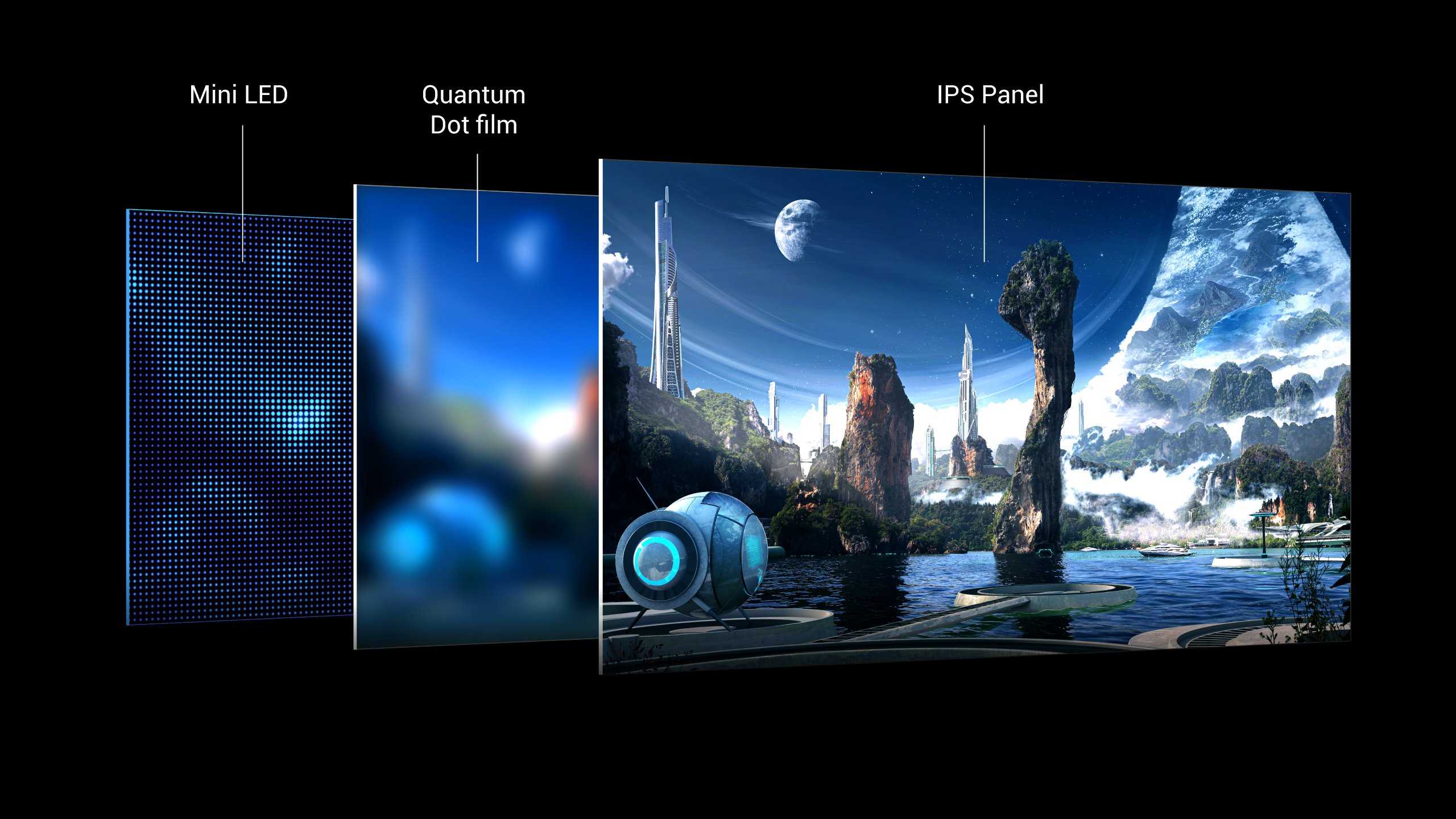
Mini LED monitors generally offer brighter displays and better contrast than quantum dot screens, making them ideal for high dynamic range content. Quantum dot displays excel in color accuracy and vibrancy, providing stunning visuals for media consumption. While Mini LED tech enhances contrast and brightness, quantum dots shine in color richness. Both have their strengths, so choosing depends on whether you prioritize contrast or color.
Mini LED monitors and quantum dot displays are two of the hottest advancements in screen technology today. If you’re trying to decide between them, it helps to understand what each brings to the table. Mini LEDs feature thousands of tiny bulbs behind the screen that allow for precise dimming and improved contrast, especially in darker scenes. Quantum dots, on the other hand, use nanocrystals to produce more vivid and accurate colors, making visuals pop with realism. Knowing how they compare in brightness, contrast, color, and overall picture quality can help you pick the perfect monitor for gaming, work, or entertainment.

How Do Mini LED Monitors Compare with Quantum Dot? A Detailed Look
Understanding Mini LED Technology
Mini LED monitors use thousands of tiny light-emitting diodes called LEDs. These LEDs serve as the backlight behind the LCD screen, providing brightness and contrast. Compared to traditional LED displays, mini LEDs are much smaller, allowing for more precise control over lighting zones. This results in deeper blacks and more vivid images, especially in dark scenes. Mini LED technology enhances local dimming, which helps improve overall picture quality. It offers better uniformity in brightness across the screen and reduces issues like blooming and halo effects.
How Quantum Dot Technology Works
Quantum Dot displays rely on nanocrystals called quantum dots to produce light. These dots emit precise colors when illuminated by a blue LED backlight. Quantum Dots help create a wider color gamut, making images more vibrant and true to life. Because they enhance color accuracy, quantum dot monitors are often favored for tasks requiring precise color reproduction like photo editing and content creation. They can be integrated into LCD panels or used in combination with OLEDs for brighter, more colorful images. Quantum Dot technology is praised for its ability to deliver rich, realistic visuals with high brightness levels.
Image Quality Compared
When comparing image quality, mini LEDs excel in contrast and black levels. The localized dimming zones allow for darker scenes without losing detail or brightness. Quantum Dots improve color richness and accuracy, providing a broader spectrum for more lively images. In bright environments, quantum dot monitors often reach higher peak brightness, making them suitable for HDR content. While mini LEDs provide excellent contrast, quantum dots tend to excel in delivering richer colors across various viewing conditions. Both technologies significantly elevate picture quality compared to standard LCDs.
Brightness and HDR Capabilities
Mini LED monitors can achieve very high peak brightness levels, often surpassing traditional LCDs. Their ability to control brightness in small zones enhances HDR performance, delivering more dynamic images. Quantum Dot displays also excel in HDR, thanks to their ability to produce bright and vibrant images with accurate colors. Combining quantum dots with mini LED backlights can result in monitors that offer both superior brightness and color accuracy. This synergy enhances HDR viewing, making scenes more realistic and immersive.
Contrast and Black Levels
Mini LED technology provides exceptional contrast ratio thanks to precise local dimming. By turning off light zones behind dark areas, they produce deep blacks without sacrificing brightness in other parts of the screen. Quantum Dot monitors typically do not influence contrast ratios directly but can improve perceived contrast when combined with high-quality backlighting. In practice, mini LED displays generally outperform quantum dot monitors in contrast and black depth. However, quantum dots enhance color vibrancy, which can complement high contrast for a balanced viewing experience.
Color Accuracy and Wide Color Gamut
Quantum Dots are known for their ability to display a wider color gamut, often covering over 90% of DCI-P3 or Rec. 2020 standards. They offer more vibrant and lifelike colors compared to traditional LCDs. While mini LED monitors mainly improve brightness and contrast, they do not inherently enhance color accuracy. However, many high-end mini LED displays incorporate quantum dot technology to combine the benefits of improved contrast with expanded color range. This hybrid approach delivers both stunning contrast and rich colors.
Viewing Angles and Uniformity
Both mini LED and quantum dot monitors usually feature IPS panels, which provide wide viewing angles. Mini LEDs can help improve uniformity across large screens by controlling light zones precisely. Quantum Dot displays often have excellent color consistency from different viewing angles. Overall, modern implementations of these technologies offer wide viewing angles with minimal color shifts or brightness loss, ensuring a consistently good experience from various positions.
Energy Efficiency and Power Consumption
Mini LED displays tend to use less power than traditional LCDs due to their efficient backlighting. The precise control of LED zones also helps save energy by reducing unnecessary brightness. Quantum Dot displays, especially those integrated with LED backlights, can consume more power when producing bright and colorful images. However, advances in display technology have led to energy-efficient quantum dot solutions that balance performance with power use.
Cost and Availability
Mini LED monitors typically cost more than standard LCDs due to their sophisticated backlighting system. High-end models may be quite expensive, but prices are gradually decreasing. Quantum Dot technology, depending on implementation, can be found in mid-range to premium monitors. Combining quantum dots with mini LED backlighting tends to increase the overall cost but offers better performance. Buyers should consider their needs and budget when choosing between these technologies.
Durability and Longevity
Both mini LED and quantum dot displays generally offer long-lasting performance, with minimal degradation over time. Mini LEDs are durable and resistant to burn-in, making them suitable for long-term use. Quantum Dot displays are also stable but may be affected by environmental factors if not properly manufactured. Regular use and proper care can ensure both types of monitors function well for many years.
Summary Table
| Feature | Mini LED Monitors | Quantum Dot Monitors |
|---|---|---|
| Image Quality | Excellent contrast, deep blacks | Rich, vibrant colors |
| Brightness | High peak brightness, good HDR | Very bright, excellent HDR |
| Color Gamut | Improved with quantum dots, wider in high-end models | Very wide, often over 90% DCI-P3 |
| Contrast Ratio | Superior due to local dimming | Dependent on backlight; generally good |
| Price Range | High, but decreasing over time | Mid to high-end |
Choosing the Right Display for Your Needs
When deciding between mini LED and quantum dot monitors, consider what is more important: contrast and black levels or vivid colors. For immersive dark-room viewing, mini LED might be better. For tasks requiring precise color accuracy, quantum dot displays provide significant benefits. Combining both technologies can offer a balanced option with excellent contrast, brightness, and color vibrancy.
Related Topics
- Difference Between OLED and LCD Displays
- What is HDR and Why Does it Matter?
- Best Monitors for Gaming and Entertainment
- Future Trends in Display Technology
- How to Choose the Perfect Monitor for Your Home or Office
Each technology offers unique advantages, and understanding these differences helps in selecting a monitor that best matches user needs. While mini LED provides better contrast and black levels, quantum dots excel at color reproduction and brightness. Often, the best available options combine these features for a superior visual experience.
OLED, QLED, or Mini-LED? Which to TV Buy in 2025
Frequently Asked Questions
How does the color accuracy of mini LED monitors compare to quantum dot displays?
Mini LED monitors typically offer excellent color accuracy thanks to their ability to deliver precise local dimming, which enhances contrast and color depth. Quantum dot displays excel in this area by utilizing nanocrystals that produce more vivid and broader color spectrums. While both technologies provide vibrant images, quantum dot monitors generally deliver richer and more precise colors across a wider range, making them ideal for tasks requiring high color fidelity.
In terms of brightness and contrast, how do mini LED monitors differ from quantum dot screens?
Mini LED monitors can achieve higher brightness levels due to their dense array of small LEDs, which allow for targeted illumination and deeper contrast. Quantum dot displays also support high brightness levels, often surpassing traditional LCDs, and contribute to better contrast ratios by enhancing the luminance of specific regions. Overall, both technologies deliver impressive brightness and contrast, but mini LED monitors tend to provide more uniform brightness across the screen, while quantum dot displays emphasize vibrant color contrast.
What are the advantages of mini LED technology over quantum dots for gaming and multimedia use?
Mini LED technology offers rapid local dimming and high peak brightness, resulting in better contrast for dynamic scenes and dark environments in gaming and multimedia content. Quantum dot displays enhance color vibrancy and maintain color accuracy at high brightness levels, which benefits media consumption. For gaming, the quick response times and contrast of mini LEDs make them preferable, whereas quantum dots excel in providing stunning, color-rich visuals for movies and creative work.
How does the lifespan and durability of mini LED monitors compare to quantum dot-based displays?
Both mini LED and quantum dot technologies typically have long lifespans and are durable. Mini LEDs are less susceptible to burn-in and degradation over time, maintaining their performance for many years. Quantum dot screens, especially those with inorganic nanocrystals, also exhibit good durability and resistance to fading. However, quantum dots may require protective coatings to prevent potential damage from environmental factors, which can influence longevity slightly depending on the manufacturing quality.
Which technology is more energy-efficient for large display setups: mini LED or quantum dot monitors?
Mini LED monitors generally consume less power because they utilize smaller LEDs that can be controlled precisely, reducing unnecessary backlight usage. Quantum dot displays can be energy-efficient as well, especially when combined with LCD backlights, but their brightness optimization depends on the display design. Overall, mini LED technology offers a slight edge in energy efficiency for large screens, making it suitable for extended use without significantly increasing power consumption.
Final Thoughts
Mini LED monitors offer precise backlighting and better contrast compared to traditional LEDs, providing vibrant visuals. Quantum dot displays excel in color accuracy and brightness, making images pop vividly.
When comparing the two, mini LED monitors focus on improved local dimming and deeper blacks, while quantum dots prioritize rich, accurate colors.
How do mini LED monitors compare with quantum dot? Each technology has distinct advantages: mini LEDs excel in contrast, and quantum dots shine in color performance.



